
CNC Machining Insights & Technical Blog
Explore expert guides, engineering innovations, and industry developments from Nanjing Fortis Storage Equipment Manufacturing Co., Ltd.
Why Choose a Dual Spindle CNC Machine?
A Dual spindle CNC machine can complete two machining operations in one setup, reducing the need to move a part between separate stations. For manufacturers, that can mean shorter cycle times, fewer handling steps, and more consistent alignment. Picture a metal bar held between two spindles: one side can be turned, then the other can be finished with less manual repositioning. Small details matter. Tool access, spindle synchronization, and workpiece support all affect the result.
The benefits depend on the job. Parts with operations on both ends may gain the most, while simple components might not justify the added equipment cost. Production teams should compare cycle-time estimates with tooling, maintenance, and operator-training needs. Ask suppliers for demonstrations using representative materials and part geometries, and verify that the machine’s specifications match the required tolerances. A published spindle speed alone tells little about real output.
There are trade-offs. More capability can mean more setup choices, and a poorly planned process may shift delays rather than remove them. That is easy to overlook. Review chip evacuation, access for tool changes, and how the machine handles production interruptions. Actual performance varies by material, tooling, and operator experience, so trial runs are useful before committing to a process change. The right machine is not always the most complex one. It is the one that fits the parts, volume, and quality targets the shop can reliably maintain.
What Is a Dual Spindle CNC Machine?
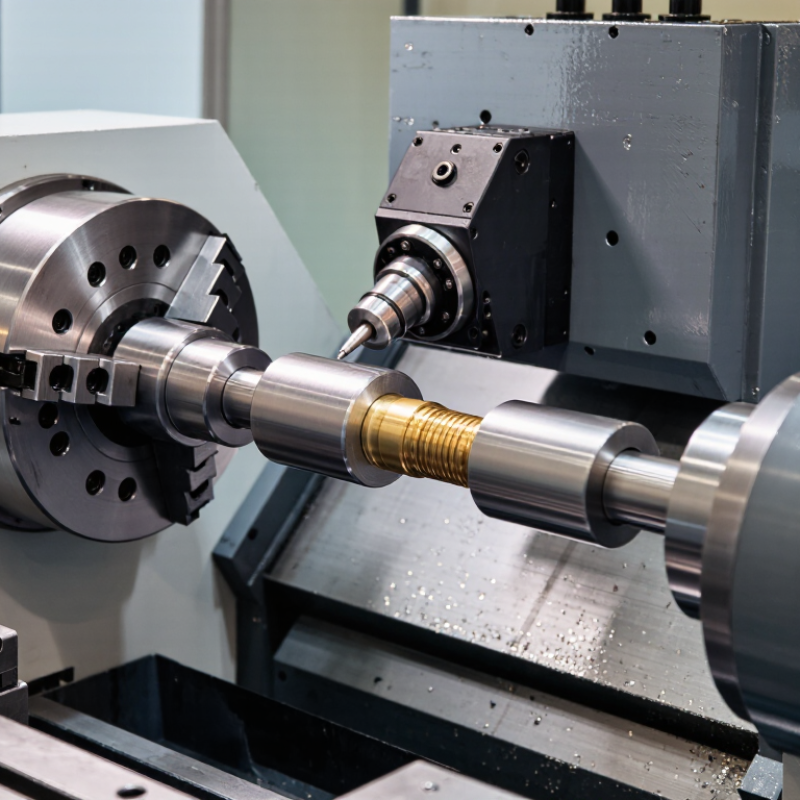
A dual spindle CNC machine has two powered spindles that hold and rotate workpieces or tools during machining. Depending on its design, both spindles may work at the same time, or the second spindle may receive a part after the first side is complete. This can reduce manual handling and help machine both ends of a component in one setup.
Picture a short metal shaft: the main spindle turns it while a cutting tool shapes its diameter. A secondary spindle can then grip the finished end and present the other side for machining. The exact sequence varies by machine, control system, and part geometry.
Two spindles do not automatically mean twice the output. Tool access, cycle timing, and setup quality still matter. I have seen the handoff step become the bottleneck when the part is difficult to grip securely.
Tips: Before choosing a machine, map each operation and check whether both spindles can reach the required features. Confirm the chuck size, spindle speed, and transfer method against your actual parts. Test a sample cycle if possible. Small details matter. A poorly planned handoff can add complexity instead of saving time.
How Do Dual Spindles Work Together?
A dual-spindle CNC machine has two independently driven workholding stations. The main spindle cuts one end of a part; the sub-spindle can grip its exposed end and receive it while the machine is running. A synchronized handoff transfers the workpiece, often without an operator removing it. The second spindle can then machine the reverse face, drill a cross-hole, or finish a feature that would otherwise need another setup. Less handling can reduce alignment errors. It is not automatic perfection.
The control system coordinates spindle speed, orientation, and axis movement during transfer. In practice, the main spindle slows or stops at a defined position, while the sub-spindle approaches, grips, and confirms its hold before cutoff. Sensors and programmed checks matter: a poor grip can damage the part or interrupt the cycle. The U.S. Census Bureau’s 2022 Annual Survey of Manufactures reported roughly $2.9 trillion in U.S. manufacturing value added; that broad figure is not a dual-spindle productivity claim, but it underscores the scale of pressure to use equipment effectively. Evaluate actual cycle times with representative parts, including setup and tool-change time. A handoff can add complexity. Sometimes, one spindle is enough.
Why Choose a Dual Spindle CNC Machine? - How Do Dual Spindles Work Together?
| Dimension | How the Dual Spindles Work | Potential Benefit | Important Consideration |
|---|---|---|---|
| Basic configuration | A dual-spindle machine has two workholding spindles. Depending on the machine design, they may operate independently or be positioned to transfer a part from one spindle to the other. | It can support more than one machining operation within a single machine setup. | Spindle layout and available motion vary by machine; not every dual-spindle model can perform every operation simultaneously. |
| Main and subspindle transfer | The main spindle machines one end of a part. The subspindle moves into position, grips the exposed end, and takes over the workpiece so the opposite end can be machined. | Both ends can often be completed in one machine cycle, reducing manual handling and repeated setup. | Transfer accuracy depends on the machine, workholding, part geometry, and process settings. |
| Simultaneous cutting | On machines equipped with suitable tooling and control functions, tools may cut at both spindles at the same time. | Overlapping operations can shorten cycle time when both operations are compatible and safely coordinated. | Simultaneous cutting is not available or practical for every part or machine configuration. |
| Independent operation | Some machines can run separate jobs on the two spindles, subject to their control system, tooling, and production setup. | Separate work zones may help balance production across compatible operations. | Operators must account for tool availability, chip management, workholding, and possible interactions between operations. |
| Setup and handling | A coordinated spindle transfer can reduce the need to remove, reorient, and reclamp a part between machining stages. | Fewer handling steps can improve workflow consistency and reduce non-cutting time. | Initial programming, tooling, and process planning can be more involved than for a single-spindle setup. |
| Suitable applications | Commonly considered for turned parts that need machining on both ends, such as shafts, fittings, bushings, and similar components. | Can be useful for repeat production where multiple operations can be combined efficiently. | Part size, material, tolerance requirements, and production volume should be assessed before selection. |
| Machine selection | Compare spindle speed and power, bar capacity, axis travel, tooling options, transfer capability, and control features. | A machine matched to the part and process can reduce bottlenecks and unnecessary operations. | Published specifications do not replace a process review using the actual part drawing and production requirements. |
Note: Capabilities differ by machine design and configuration. Cycle-time improvements depend on the part, tooling, programming, and production conditions.
What Production Advantages Does a Dual Spindle Offer?
Why Choose a Dual Spindle CNC Machine?
What Production Advantages Does a Dual Spindle Offer?
A dual spindle CNC machine can cut cycle time by handling two operations in one setup. One spindle may rough-turn a part while the other finishes a second part. This keeps the cutting area productive and reduces idle time between jobs. For suitable components, the machine can also complete front- and back-side work without manual repositioning. That means fewer handling steps and less chance of introducing alignment errors.
The gains depend on the part and process. A poor tool sequence can leave one spindle waiting, and tight work envelopes may limit part size. Deloitte’s 2024 Smart Manufacturing Survey found that 86% of surveyed manufacturers expect smart manufacturing to be a primary driver of competitiveness within five years. That survey does not measure dual-spindle machines directly, but it highlights the industry’s focus on improving equipment use and production flow. Track cycle time, changeover time, and spindle utilization during a real production trial before estimating savings.
Which Parts and Industries Benefit Most?
Why Choose a Dual Spindle CNC Machine?
Which Parts and Industries Benefit Most?
Dual spindle CNC machines suit parts requiring repeated turning operations on both ends. Shafts, bushings, threaded fittings, and valve bodies are common examples. One spindle can machine the front face while the second prepares the opposite side. That can reduce handling, alignment errors, and idle time.
Automotive suppliers often benefit from producing drive pins, wheel components, and hydraulic fittings in consistent batches. Aerospace manufacturers may use dual spindles for compact brackets and precision sleeves, although complex alloys still demand careful tooling. Medical manufacturers can machine small bone screws and surgical components, but cleanliness and process validation remain critical. The machine is not a universal answer.
Grand View Research valued the global CNC machine market at approximately $88.6 billion in 2023. Its report projects continued growth through 2030, driven by automated production and tighter tolerances. The International Federation of Robotics recorded 541,302 industrial robot installations worldwide in 2023. That figure reflects a wider movement toward connected, less manual factories.
Cycle time matters.
A dual spindle may shorten production when both operations are balanced. However, poor part transfer design can cancel the advantage. In my experience, shops should measure loading time, tool changes, inspection delays, and scrap rates before purchasing. High-volume metal parts usually show the clearest return. Low-volume work may not.
What Factors Should Guide Machine Selection?
Selecting a dual spindle CNC machine starts with the part, not the machine’s headline specifications. Review part diameter, length, material, and required tolerances. A second spindle can transfer parts automatically, reducing handling between operations. That advantage matters when both ends require turning, drilling, or threading.
Production volume should guide the decision. For repeated components, synchronized spindles may shorten cycle times and reduce idle movement. For low-volume work, however, setup complexity may outweigh those gains. Ask for a realistic test cut using your material, tooling, and programmed sequence. Numbers from a brochure are not enough.
Check spindle power, chuck capacity, axis travel, and available tooling positions. Confirm that the control system supports the operators’ skill level. Training time is a real production cost. Maintenance access also deserves attention; crowded work areas can make routine cleaning surprisingly difficult. Review electrical requirements, chip management, coolant filtration, and service response before purchase. A machine that fits the floor but strains the power supply is a poor choice. I have seen teams focus on cycle time and overlook workholding flexibility. That mistake can return during the first urgent design change. Ask for tolerance results over several parts, not one impressive sample. Then compare measured performance with your quality records and future workload.
Why Choose a Dual Spindle CNC Machine? What Factors Should Guide Machine Selection?
This capability comparison highlights the practical differences between single- and dual-spindle CNC turning architectures. A dual-spindle machine can support two workholding positions and may complete front- and back-side operations in one process when spindle transfer is available.
Selection should also consider part geometry, required tolerances, bar diameter, spindle speed and torque, tool capacity, automation, chip control, floor space, and total cost of ownership.
FAQS
It has two powered spindles that hold and rotate parts or tools. The spindles may work together or pass a part between them.
The main spindle shapes one end. A sub-spindle grips the exposed end and presents the other side for machining. Think of a short metal shaft.
No. Tool access, cycle timing, and setup quality still affect production. Two spindles alone do not guarantee faster work.
The main spindle moves to a programmed position. The sub-spindle approaches, grips the part, and confirms its hold before cutoff.
It may machine a reverse face, drill a cross-hole, or finish another feature that would otherwise require a new setup.
An insecure grip can damage the part or stop the cycle. The transfer may also become a bottleneck. Small details matter.
Compare chuck size, spindle speed, and transfer method with actual parts. Check whether both spindles can reach every required feature.
Test a representative cycle if possible. Include setup and tool-change time, not just cutting time. The result may be less impressive than expected.
Yes. If parts need few setups or do not benefit from a handoff, one spindle may be simpler. It is worth checking.
Conclusion
A Dual spindle CNC machine is a computer-controlled machining system equipped with two independent spindles, allowing it to perform operations from different positions or work on multiple parts with greater efficiency. The spindles can operate simultaneously, transfer a workpiece between machining stages, or handle separate processes such as turning, drilling, and milling. This coordinated setup helps reduce handling time, improve workflow continuity, and increase production output while maintaining consistent accuracy.
Dual spindle CNC machines are especially valuable for manufacturers producing complex, high-volume, or repeatable components in industries such as automotive, aerospace, electronics, medical equipment, and general engineering. When selecting a machine, users should consider spindle speed and power, workpiece capacity, axis configuration, control features, automation compatibility, available floor space, maintenance requirements, and total operating cost. The right choice depends on part geometry, material, production volume, required tolerances, and future manufacturing needs.

Blog Tags: