
Discover how Trevisan's Horizontal Machining Centers minimize setup time and labor costs — Learn More →
Insights & Updates

CNC Machining Insights & Technical Blog

Explore expert guides, engineering innovations, and industry developments from Nanjing Fortis Storage Equipment Manufacturing Co., Ltd.

0%

Global aerospace production is entering a demanding expansion cycle. Boeing’s 2024 Commercial Market Outlook forecasts 44,040 new commercial aircraft deliveries through 2043, valued at approximately $7.2 trillion. Airbus reaches a similar conclusion, projecting demand for 42,430 aircraft during the same period. These figures increase pressure on manufacturers, suppliers, and precision machining partners.

An Aerospace CNC machining center must deliver more than speed. It should control titanium heat, maintain micron-level repeatability, and manage complex five-axis paths without excessive operator intervention. In a real workshop, performance appears in small details: stable spindle temperatures, clean chip evacuation, reliable probing, and consistent parts after overnight production. Oliver Wyman’s 2024 Global Fleet and MRO Market Forecast also expects the commercial aviation maintenance market to grow substantially, strengthening demand for replacement parts and repair capability.

Manufacturing quality authority W. Edwards Deming said, “Quality comes not from inspection, but from the improvement of the production process.” That principle guides this selection. The Top 10 Aerospace CNC Machining Centers for Global Buyers compares machine rigidity, automation, software integration, service reach, and lifecycle cost. No ranking is universally correct. A large aerospace plant may prioritize pallet systems and unattended production, while a smaller supplier may value accessibility and flexible programming. Some choices may appear excessive. That is intentional. Buyers should question published cycle-time claims, verify local technical support, and test difficult materials before signing a contract. Reports describe market direction, not every shop floor reality. Titanium chips still reveal the truth.
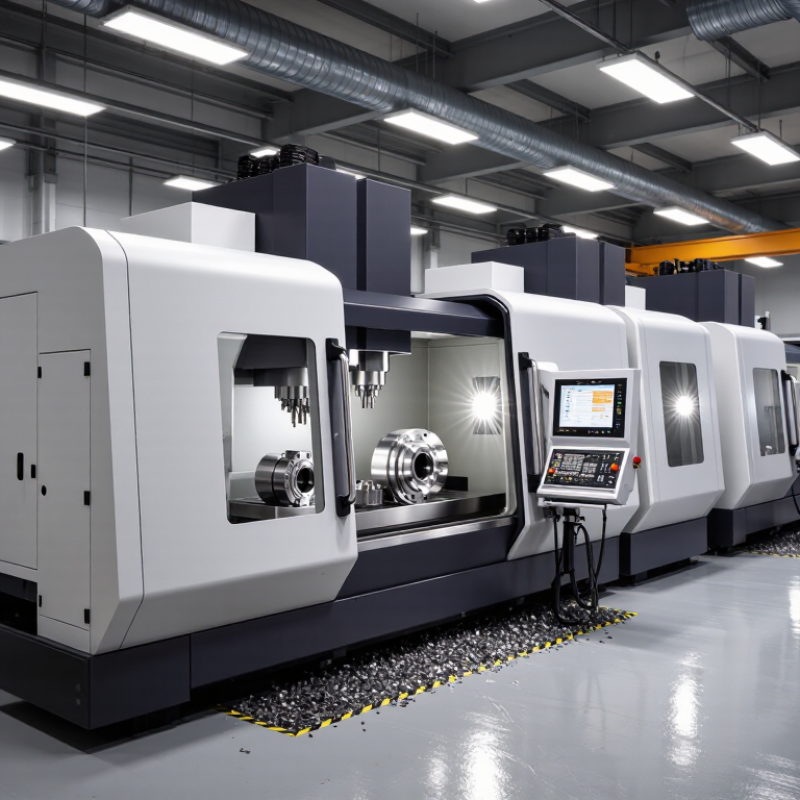
Top 10 Aerospace CNC Machining Centers for Global Buyers

Aerospace CNC Machining Centers: 5-Axis Accuracy and ±5–10 µm Tolerances

Aerospace CNC Machining Centers: 5-Axis Accuracy and ±5–10 µm Tolerances

For global aerospace buyers, a machining center must control accuracy across complex five-axis movements. A ±5–10 µm tolerance is demanding, especially on titanium, aluminum, and nickel-based alloys. The machine should maintain stable positioning while the table, spindle, and cutting tool change direction. High-resolution encoders help, but they do not solve every problem.

Thermal control matters just as much. In daily production, spindle heat can shift a critical bore by several micrometers. I have seen excellent machines lose accuracy after long cycles without thermal compensation. Buyers should review calibration records, probing repeatability, spindle growth data, and test-cut results. A practical acceptance test may include a blisk-like contour, a deep pocket, and multiple tool orientations. Measure the parts with a certified CMM, not only the machine’s internal probe.

Check the details.

Rigid structures reduce vibration during heavy cuts. Short tool setups improve surface consistency. Automatic probing can detect tool wear before it damages a costly component. However, ±5–10 µm should never be treated as a permanent promise under every condition. Material stress, coolant temperature, operator practice, and fixture design can change the result. A reliable supplier explains these limits clearly and provides traceable inspection data. That honesty is often more valuable than impressive brochure specifications.

How the Top 10 Centers Compare by 20,000+ RPM Spindles and Machine Travel

For global aerospace buyers, the top 10 CNC machining centers should be compared beyond price and advertised accuracy. A spindle exceeding 20,000 RPM can reduce cycle times on aluminum ribs, thin-wall housings, and complex brackets. However, speed matters only when the toolholder, bearings, cooling system, and cutting strategy remain stable. Excessive vibration can quickly damage surface quality.

Travel matters. A center with approximately 1,000 mm of X travel may suit compact structural parts, while larger platforms offer more room for long panels and multiple fixtures. Y and Z clearance also affect tool access, chip evacuation, and operator safety. A machine with 2,000 mm of X travel is not automatically better. Floor space, thermal control, and setup repeatability still influence production results.

During technical evaluations, buyers should request test cuts using representative aerospace alloys. Check spindle runout after warm-up, positioning accuracy across the full travel range, and surface finish at different RPM levels. Ask for maintenance records and documented calibration procedures. A spreadsheet can mislead. Speed and travel figures rarely show how the machine behaves after eight hours of operation. That assumption fails. The most reliable comparison combines measured performance, operator feedback, service response, and verified process capability. There is no perfect center; even strong machines may need tighter environmental control or better fixturing than expected.

Aerospace Materials: Titanium, Aluminum, and Nickel-Alloy Machining Capability

Top 10 Aerospace CNC Machining Centers for Global Buyers

Aerospace Materials: Titanium, Aluminum, and Nickel-Alloy Machining Capability

Aerospace buyers should judge machining centers by material control, not speed alone. Aluminum cuts quickly, but titanium demands stable torque, controlled heat, and strong chip evacuation. Nickel alloys create even greater pressure on tools and spindles. USGS Mineral Commodity Summaries 2024 reported global primary aluminum production near 70 million metric tons in 2023. The same report estimated global mined nickel output at about 3.6 million metric tons. These figures show the scale of available materials, not machining difficulty.

A reliable center should offer rigid structures, high-pressure coolant, thermal compensation, and five-axis interpolation. Titanium parts often need conservative cutting parameters and careful fixture design. Nickel-alloy components need sharp tool monitoring because work hardening can accelerate failure. Aerospace supply-chain forecasts also indicate sustained aircraft demand over the next two decades. That raises the value of repeatable machines, detailed inspection records, and qualified process control. In practice, even an expensive center can disappoint when software, tooling, or operator training is weak. I have seen performance claims become less convincing during long titanium cycles.

Tips: Ask for test cuts using your actual alloy, wall thickness, and tolerance. Request cycle-time evidence, tool-life data, and inspection results. Do not compare spindle speed alone. Also check coolant filtration, probing accuracy, and service response in your region. Small details matter.

Global Buyer Standards: AS9100, ISO 9001, and 5-Axis Process Qualification

Top 10 Aerospace CNC Machining Centers for Global Buyers

Global buyers should evaluate more than spindle speed, travel range, and positioning accuracy. The supplier’s quality system matters just as much. AS9100 shows disciplined aerospace controls, including risk management, traceability, configuration control, and corrective action. ISO 9001 supports consistent procedures across purchasing, production, inspection, and delivery. Neither certificate proves that every machined part will be perfect.

Ask for current certificates, audit scope, expiry dates, and certification bodies. Check whether the certificate covers the actual production site. Review material certificates, tool-life records, calibration data, and nonconformance reports. Experienced buyers also examine first article inspection practices and measurement system analysis. Small details reveal process maturity. A clean document is not enough.

Five-axis qualification deserves practical evidence. Request test-cut results, volumetric accuracy data, rotary-axis calibration records, and repeatability studies. Confirm how the supplier controls thermal growth, tool deflection, fixture variation, and post-processing changes. A capable center should maintain stable results across different operators and production batches. Still, qualification tests can represent ideal conditions. That limitation deserves honest discussion. Some suppliers overvalue machine specifications and undervalue operator training. I have seen impressive accuracy claims weaken during long unattended cycles. Independent inspection, sample production, and regular process reviews create stronger confidence for global aerospace purchasing teams.

Total Cost Evaluation: Automation, Cycle Time, Energy Use, and Service Coverage

Top 10 Aerospace CNC Machining Centers for Global Buyers

Comparing ten aerospace CNC machining centers requires more than checking purchase prices. In practical shop-floor evaluations, automation often delivers the largest labor savings. Pallet changers, probing, and tool monitoring can reduce idle minutes between parts. However, automation adds sensors, software, and maintenance contracts. The spreadsheet is rarely clean.

Cycle time deserves a part-level study. A machine cutting an aluminum rib may save seconds through faster acceleration. Yet aerospace components often need careful finishing, inspection, and tool changes. Measure the complete route, not only spindle time. Record loading, probing, deburring, inspection, and operator adjustments. Small delays become expensive across repeated production batches. That assumption can fail.

Energy use also changes the total cost. Compare spindle power, standby consumption, coolant systems, and compressed-air demand. A machine running ten hours daily may expose major differences within one year. Ask for measured data under comparable cutting conditions. Marketing estimates are not enough.

Service coverage matters equally. Review technician response times, remote diagnostics, spare-parts availability, training, and local language support. A low-cost machine can become costly after one unresolved alarm.

I would also examine maintenance records from similar installations, while accepting that performance varies by facility. Global buyers should price downtime, software updates, operator learning, and unexpected integration work. Leave room for uncertainty. Precision is important, but false precision can mislead a purchasing team.

FAQS

Why is five-axis accuracy important in aerospace machining?

Five-axis movement reaches complex surfaces with fewer setups and less repositioning error. A stable center must hold alignment while the table and spindle change direction. Small errors matter.

Can a machine permanently guarantee ±5–10 µm tolerance?

No. That tolerance depends on temperature, material stress, coolant conditions, tooling, fixtures, and operator practice. Spindle heat can shift a bore several micrometers during a long cycle. The promise needs context.

How should buyers verify machining accuracy?

Request calibration records, probing repeatability, spindle-growth data, and test-cut results. Measure finished parts with a certified CMM, not only the internal probe. Use real evidence.

What should an acceptance test include?

Include a blisk-like contour, a deep pocket, and several tool orientations. Test the full travel range after spindle warm-up. Measure position accuracy and surface finish.

Is a spindle above 20,000 RPM always better?

No. High speed helps aluminum parts, thin walls, and complex brackets when vibration stays controlled. Toolholders, bearings, cooling, and cutting strategy must support that speed. Speed alone misleads.

How does machine travel affect aerospace production?

Around 1,000 millimeters of X travel may suit compact structural parts. Larger travel can support long panels and multiple fixtures. More travel also requires floor space and stronger thermal control.

What capabilities are needed for titanium and nickel alloys?

Titanium needs stable torque, controlled heat, strong chip evacuation, and conservative cutting parameters. Nickel alloys need sharp tool monitoring because work hardening can accelerate tool failure. Hard materials expose weak processes.

Which details should buyers compare beyond specifications?

Compare test cuts, cycle-time evidence, tool-life data, inspection results, and maintenance records. Check coolant filtration, probing accuracy, fixture design, and regional service response. I would not trust a spreadsheet alone.

How can thermal control improve dimensional stability?

Thermal compensation can reduce shifts caused by spindle heat during extended production. Review spindle-growth measurements after realistic operating periods. Eight hours can change the result.

Can expensive equipment still deliver poor aerospace parts?

Yes. Weak software, unsuitable tooling, poor training, or unstable fixtures can reduce performance. I once treated hardware specifications as decisive; that judgment was incomplete. Process control matters more than appearance.

Conclusion

Choosing the right Aerospace CNC machining center is essential for producing safe, precise, and repeatable aerospace components. The leading systems combine 5-axis machining with accuracy in the ±5–10 µm range, high-speed spindles exceeding 20,000 RPM, and sufficient machine travel for both compact and large structural parts. Buyers should also confirm reliable machining performance for titanium, aluminum, and nickel-based alloys, since each material requires different cutting strategies, thermal control, tooling, and chip-management capabilities.

A complete evaluation should go beyond machine specifications. Global buyers need to review AS9100 and ISO 9001 compliance, documented 5-axis process qualification, inspection procedures, and traceability systems. Total cost should include automation potential, cycle time, energy consumption, tooling requirements, operator training, maintenance, and service coverage in the target region. By balancing precision, material capability, productivity, certification, and long-term support, manufacturers can select a machining solution that improves quality, reduces production risk, and supports efficient aerospace manufacturing.

Charlotte

Charlotte

Charlotte is a dedicated marketing professional with a deep expertise in the company’s product offerings. With an unwavering commitment to excellence, she plays a pivotal role in shaping the company’s online presence through regular updates to the professional blog. Her insightful articles not only......