
CNC Machining Insights & Technical Blog
Explore expert guides, engineering innovations, and industry developments from Nanjing Fortis Storage Equipment Manufacturing Co., Ltd.
Selecting a Heavy-duty spindle quill machine is a practical decision, not a simple specification exercise. The right model must match the material, workload, accuracy, and available floor space. A machine that looks powerful may still perform poorly under continuous production pressure.
Experienced operators usually begin with the spindle quill diameter and travel range. These dimensions affect cutting depth, tool stability, and access to large workpieces. Motor power matters, but torque delivery at lower speeds matters more for heavy milling. Check the table size, load capacity, feed controls, and spindle speed range carefully. Small details become important during a twelve-hour shift.
This guide presents seven useful tips for comparing machines with greater confidence. It considers rigidity, quill movement, control systems, maintenance access, safety features, supplier support, and total operating cost. Reliable manufacturers should provide clear test data, service records, and realistic tolerances. Independent reviews and hands-on demonstrations can reveal vibration that brochures often hide. A perfect choice rarely exists. Even experienced buyers can overlook coolant access or awkward chip removal. That is why each recommendation should be tested against actual production conditions. Measure your largest workpiece, review typical cutting tools, and ask operators what causes delays. Practical evidence is more valuable than impressive wording. A careful selection process protects quality, uptime, and long-term investment.
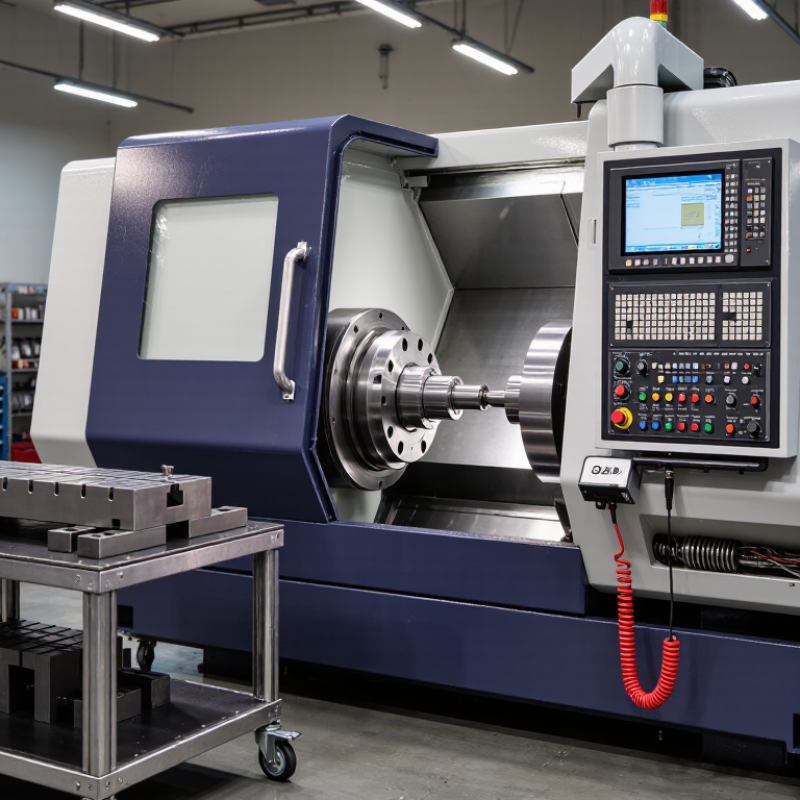
Define the Spindle Quill Machine’s Heavy-Duty Requirements
Choosing a heavy-duty spindle quill machine begins with defining the work it must survive daily. A large body alone proves little. Measure the required spindle diameter, quill travel, maximum boring diameter, cutting torque, and axial thrust. Include the heaviest workpiece, not the average one. A 1,200-kilogram casting can behave differently from a smaller steel component.
Check the duty cycle carefully. Continuous roughing demands stronger bearings, greater motor capacity, and stable heat control. Intermittent drilling may need less power but still requires rigid quill guidance. Record the material, tool diameter, cutting speed, feed rate, and expected production hours. These figures help engineers select realistic spindle power instead of relying on impressive peak ratings. Ask for test data at operating temperature.
Rigidity is easy to underestimate. During a shop-floor trial, watch for vibration marks, tool deflection, and changes in bore size. Measure accuracy before and after extended cutting. Quill locking, column stiffness, table load capacity, and coolant delivery also affect results. A machine may meet its brochure specifications yet struggle with long tools or uneven castings. That is a useful warning. Leave a sensible capacity margin, perhaps 20 percent, although the correct allowance depends on tooling and materials. Overspecification costs money, but underspecification costs more through damaged tools, rework, and lost production.
7 Tips to Choose a Heavy Duty Spindle Quill Machine - Define the Spindle Quill Machine’s Heavy-Duty Requirements
| Tip | Selection Dimension | Recommended Heavy-Duty Requirement | Why It Matters | Verification Point |
|---|---|---|---|---|
| 1 | Spindle Quill Diameter and Rigidity | Select a quill diameter of approximately 100–200 mm for demanding boring, drilling, and milling operations, with a short unsupported extension whenever possible. | A larger and more rigid quill helps reduce deflection, vibration, chatter, and dimensional variation during high-load cutting. | Review the quill material, wall thickness, bearing arrangement, maximum extension, and manufacturer’s deflection data. |
| 2 | Quill Travel and Working Envelope | Choose a usable quill stroke of about 300–1,000 mm, depending on workpiece depth, fixture height, and required tool access. | Adequate travel prevents repeated repositioning and allows deep bores or large components to be machined efficiently. | Compare effective stroke—not only nominal stroke—with the workpiece dimensions, table travel, and tool length. |
| 3 | Spindle Power and Torque | For heavy material removal, consider a spindle motor in the range of 15–75 kW, with high continuous torque and a low-speed operating range of approximately 20–500 rpm. | Heavy cutting depends more on continuous torque and power at low speed than on maximum speed alone. | Check continuous and peak torque curves, rated duty, gearbox performance, and power available at the intended cutting speed. |
| 4 | Tool Taper and Workholding Capacity | Use a robust taper such as ISO 50, BT 50, HSK 100, or a comparable heavy-duty interface when tooling, cutting forces, and tool diameters require high rigidity. | A larger taper improves tool support, torque transmission, and resistance to tool pullout during interrupted or high-load cuts. | Confirm taper compatibility, allowable tool diameter, drawbar force, automatic tool-change limits, and balanced-tool requirements. |
| 5 | Machine Structure and Load Capacity | For heavy-duty work, prioritize a cast or fabricated structure with a machine mass of roughly 10–60 tonnes and a table or fixture capacity matched to the heaviest workpiece. | A rigid, well-supported structure absorbs cutting forces and reduces vibration, foundation movement, and loss of accuracy. | Check table load rating, guideway design, foundation requirements, clamping points, and static and dynamic load calculations. |
| 6 | Accuracy, Thermal Stability, and Quill Control | For precision heavy machining, target positioning accuracy around ±0.01–±0.03 mm per metre and repeatability around ±0.005–±0.015 mm, subject to the machine class and test standard. | Heat from the spindle, gearbox, bearings, and cutting process can change alignment and bore dimensions during long production cycles. | Request acceptance-test results, thermal compensation functions, linear scale options, quill positioning feedback, and warm-up procedures. |
| 7 | Cooling, Lubrication, Safety, and Duty Cycle | Specify continuous-duty operation, automatic lubrication, spindle or gearbox cooling, chip management, overload protection, and an enclosure designed for the cutting fluid and material used. | Reliable thermal control and protection systems support stable operation, longer component life, and safer unattended or extended machining. | Verify duty-cycle rating, coolant flow and filtration, lubrication monitoring, emergency stops, interlocks, guarding, and applicable local safety requirements. |
Note: The numerical ranges are typical engineering selection references. Final requirements should be confirmed through the workpiece material, cutting-tool data, required accuracy, production cycle, and a formal machine acceptance test.
FAQS
Look for thick, continuous castings in the base, column, and table. A heavy frame usually reduces vibration. Check ribs, joints, anchoring points, and the column connection. Weight alone proves little.
Cast iron can absorb vibration during heavy cutting. Hardened steel suits quill shafts, guideways, and wear surfaces. Alloy steel may support high-load components. Inspect each material’s actual function, not just its name.
Move the quill through its full travel and check for play. Run the spindle at several speeds. Listen for uneven noise and changing vibration. Request runout measurements under realistic loads.
A large motor may still lose speed during interrupted cuts. Check torque reserve, transmission stiffness, heat buildup, gearbox backlash, and lubrication access. Request measured torque curves, not only rated power.
Ask for positioning accuracy and repeatability test results. Display resolution is not machining accuracy. Inspect parts made under real cutting conditions. Cold-test figures can mislead.
Look for interlocked guards, accessible emergency stops, safe restart logic, and clear lockout points. Test whether power recovery prevents unexpected spindle starts. They may feel inconvenient. That is often the point.
Include installation, tooling, training, electricity, replacement parts, maintenance, and downtime. A cheaper machine can become costly after repeated adjustments. Keep a realistic repair budget.
Confirm response times, remote diagnosis, service coverage, and technician availability. Request detailed manuals and workshop references. Check access to bearings, seals, lubricants, and control parts. Difficult access encourages skipped maintenance.
Plan daily cleaning, weekly lubrication, and periodic alignment checks. Inspect the quill and spindle safely. Small adjustments matter. I once underestimated them, and later accuracy suffered. No checklist is perfect.
Conclusion
Choosing a Heavy-duty spindle quill machine requires more than selecting the largest or most powerful model available. Start by defining the required workload, materials, machining frequency, and operating conditions. Then compare spindle capacity, quill travel, load performance, and the machine’s ability to maintain stable operation during demanding cuts. A rigid frame, durable materials, and well-designed structural support are essential for reducing vibration and preserving accuracy over time.
The evaluation should also include the drive system, control functions, positioning accuracy, emergency protection, and operator safety features. Practical factors are equally important, including purchase cost, energy use, maintenance requirements, spare-part availability, technical support, and expected service life. By balancing performance, construction quality, operational convenience, and long-term ownership costs, buyers can select a reliable machine that meets present production needs while providing flexibility for future projects.