
Discover how Trevisan's Horizontal Machining Centers minimize setup time and labor costs — Learn More →
0%

Fluid ends are unforgiving parts. A small error in a cross-bore, sealing face, or deep passage can compromise fit and pressure performance. CNC machining for fluid ends therefore depends on more than machine capacity. Material control, tool selection, dimensional inspection, and repeatable setup all matter.

The market is growing. Grand View Research valued the global CNC machine market at approximately $101.2 billion in 2023 and forecast a 10.3% compound annual growth rate from 2024 to 2030. That broad market figure does not measure fluid-end machining specifically, but it signals expanding investment in precision production. Manufacturing researcher Dr. David Dornfeld has emphasized evaluating machining beyond output alone, including energy and process impacts. That perspective is useful here: a fast cycle is not automatically a good cycle.

Look closely at the details. Can a shop hold tolerances across a long bore? Does it document inspection results? Can it machine the selected alloy without leaving rough edges around ports? These questions separate a capable supplier from a polished brochure. The comparison below examines seven CNC machining services for fluid ends, with attention to precision, material experience, quality practices, and practical fit. Not every provider will suit every design. And specifications still need checking.
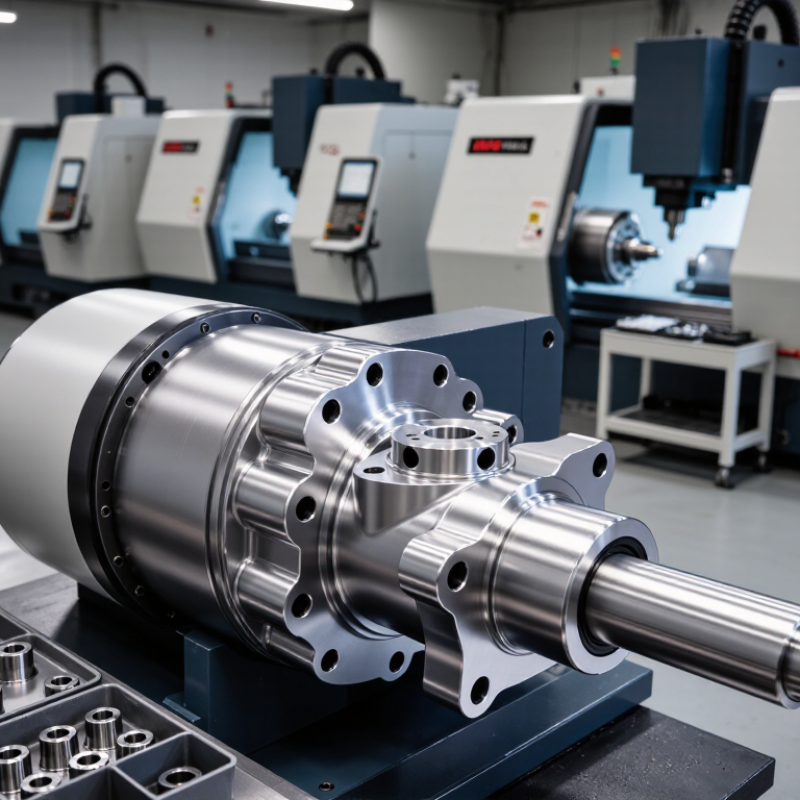
7 Best CNC Machining Services for Fluid Ends

Understanding Fluid Ends and Their Machining Requirements

A fluid end is the pressure-bearing block in a reciprocating pump. Its intersecting boreholes carry fluid through suction and discharge valves, often under severe pressure cycling. That geometry makes machining more demanding than simply producing a large, square block. Cross-hole alignment, thread form, sealing faces, and surface finish all affect assembly and service life. Small errors matter.

Pressure comes first. API Standard 7K covers drilling and well-servicing equipment, including mud-pump components; machinists should confirm the applicable edition and the customer’s specified pressure rating. Material traceability and inspection records matter, too. A CNC supplier may use multi-axis boring, staged drilling, and in-process probing to control deep passages and reduce setup variation. Deburring deserves attention. A burr left inside a crossing passage can disturb flow or damage a valve.

The U.S. Department of Energy’s Improving Pumping System Performance sourcebook reports that pumping systems can account for 25–50% of electricity use in some industrial facilities.

That figure is not specific to fluid ends, but it underscores why reliable pump components matter. Even a careful process needs review: drawings may not fully describe inspection access, and that gap should be discussed before cutting begins.

How CNC Machining Shapes Fluid End Performance

A fluid end works under repeated pressure, so machining accuracy affects more than appearance. Its internal passages guide fluid, while valve seats, threaded ports, and sealing faces must align closely. CNC machining can hold these features to specified dimensions and produce repeatable parts across a production run. Fit matters. A slightly misplaced bore may complicate assembly or disturb flow, even when the exterior looks precise.

For a fluid end, surface finish and inspection matter alongside dimensional tolerances. Smooth sealing surfaces can support reliable contact, but the correct finish depends on the design and service conditions. A capable machining service should explain how it controls tool wear, checks critical dimensions, and handles material variation. Ask for inspection records tied to key features, not just a general quality statement. One detail is easy to underestimate: a perfect drawing cannot account for every real-world assembly issue. Trial fitting and feedback may reveal problems the first pass missed. That is not a failure; it is useful evidence for refining the process. Process control should follow the part’s actual requirements, not a promise of precision alone.

7 Best CNC Machining Services for Fluid Ends — How CNC Machining Shapes Fluid End Performance

These are machining service categories commonly used in fluid-end production and repair. Suitability and tolerances depend on the design, material, operating conditions, and engineering requirements.

CNC Machining Service Typical Fluid-End Features Potential Performance Contribution Key Quality Checks
1. Multi-axis CNC milling Intersecting fluid passages, external profiles, mounting faces, and complex internal geometry Can reduce setups and help maintain alignment between related features Passage location, wall thickness, datum relationships, and surface condition
2. CNC turning and boring Cylindrical bores, counterbores, seats, and concentric features Supports controlled fit and concentricity for components installed in machined openings Bore diameter, roundness, concentricity, and finish requirements
3. Deep-hole drilling Long, narrow fluid passages and cross-drilled channels Creates internal flow paths; accurate positioning helps preserve the designed passage layout Hole straightness, breakthrough position, burrs, and passage cleanliness
4. Precision reaming and honing Selected bores requiring a controlled diameter or surface finish Can improve bore size consistency and surface characteristics when specified by the design Diameter, cylindricity, finish, and compatibility with the mating component
5. CNC threading and thread milling Threaded ports, plugs, and connection features Produces repeatable threads for specified connections and threaded closures Thread form, pitch, gauge fit, engagement length, and port location
6. CNC face milling and surface finishing Mounting faces, gasket faces, and other specified contact surfaces Helps establish flatness and surface condition required for proper assembly Flatness, parallelism, finish, and absence of machining damage
7. CNC repair machining and feature restoration Worn or damaged bores, seats, threads, and sealing surfaces, subject to engineering approval May restore a feature to an approved repair dimension or prepare it for an engineered repair process Inspection before and after machining, remaining wall thickness, dimensions, and repair acceptance criteria

Key Criteria for Choosing a CNC Machining Service

Choosing a CNC machining service for fluid ends starts with the part’s actual job. These components face pressure, repeated loading, and demanding sealing requirements. Ask whether the shop has experience with comparable materials, wall thicknesses, and port geometries. A machine list alone proves little. Request examples of inspection records, dimensional reports, and documented process controls. Check how the supplier handles critical bores, threaded connections, and sealing faces. A small mismatch can cause assembly trouble or leakage.

Fit matters. Confirm that inspection methods suit the features that matter, including bore size, flatness, and thread quality. Ask how tools are maintained and how operators respond when measurements drift. Material traceability and clear revision control also help prevent mix-ups between similar parts. If a shop proposes a faster process, ask what changes in surface finish or tolerance may follow. Get those limits in writing. Communication counts, too: engineers should be able to discuss drawings, flag unclear dimensions, and explain trade-offs plainly. No checklist catches every issue, and I would still want a first-article review before approving repeat production. A confident sales promise is not a substitute for measured evidence.

Seven CNC Machining Services for Fluid Ends

Fluid ends contain intersecting passages, threaded ports, and pressure-bearing surfaces. Their machining demands more than a clean exterior. CNC turning shapes cylindrical features, while multi-axis milling cuts complex faces and angled connections. Deep-hole drilling creates long internal passages. Chips and heat need careful control. A blocked passage can compromise later cleaning and inspection.

Precision boring refines drilled openings and helps maintain alignment between connected passages. Thread machining produces consistent port connections, but the correct form and fit must follow the approved drawing. Face milling prepares sealing surfaces for dependable contact. Surface grinding can improve flatness where the design requires it. These seven services—turning, multi-axis milling, deep-hole drilling, boring, thread machining, face milling, and surface grinding—may be combined according to geometry, material, and tolerance needs.

Process planning matters. A shop should review material certificates, drawing revisions, datum choices, and inspection requirements before cutting begins. Measuring critical bores and sealing faces during production can catch drift early. Small details matter. Yet no single setup guarantees a perfect part; tool wear, material variation, and awkward passage intersections can still cause trouble. I would not assume a smooth-looking surface proves the internal geometry is correct. Reliable work pairs documented machining steps with suitable measurement methods and clear communication when a feature needs clarification.

Comparing Services by Quality, Capabilities, and Lead Time

For fluid ends, compare seven CNC service capabilities: prototype machining, three-axis milling, five-axis milling, deep-hole drilling, precision boring, thread cutting, and finishing with inspection. A strong provider should show how it controls bore alignment, sealing faces, and thread dimensions. Ask for sample inspection reports, not just a claim of tight tolerances. Look for equipment suited to the part’s size and alloy, plus documented checks at critical stages. Quality is more than a polished surface. A small bore mismatch can affect assembly.

Lead time depends on material availability, setup complexity, and inspection requirements. Ask for separate estimates for programming, machining, and final checks. A fast quote is not a reliable delivery plan. Confirm how design changes or failed inspection affect the schedule. Even a careful comparison has gaps; drawings may not reveal every shop-floor constraint.

Tips

Send a complete drawing with material, tolerances, and critical features clearly marked. Ask whether the quoted date includes inspection and finishing. Compare the same part and revision across suppliers. Small detail. Big difference. A short technical call can also reveal whether the team understands fluid-end pressure paths—or is only reading dimensions.

FAQS

What is a fluid end?

It is the pressure-bearing block in a reciprocating pump. Internal passages carry fluid through suction and discharge valves.

Why does machining accuracy matter?

Misaligned bores can complicate assembly or disturb flow. Small errors matter.

Which features need careful machining?

Cross-passages, threaded ports, valve seats, and sealing faces need close attention. Their alignment and finish affect fit and service.

Which machining services may be used?

Work may include turning, multi-axis milling, deep-hole drilling, boring, thread machining, face milling, and surface grinding. The part determines the process.

How are deep passages controlled?

Staged drilling and in-process measurements can help control long passages. Chips and heat need attention.

Why is deburring important?

A burr inside a crossing passage can disturb flow or damage a valve. It may be hard to spot.

What inspection records should a shop provide?

Ask for records tied to critical bores, threads, and sealing faces. A general quality statement may not show enough.

Does a smooth surface prove a part is accurate?

No. Internal geometry still needs suitable measurement, and a smooth exterior proves little about hidden passages.

What should be reviewed before machining starts?

Confirm drawing revisions, material records, datum choices, pressure requirements, and inspection access. Gaps in a drawing deserve discussion.

Can the first machined part reveal problems?

Yes. Trial fitting may expose issues that drawings missed. That feedback can refine the process, though it does not guarantee perfection.

Conclusion

Fluid ends are precision components that must withstand demanding pressure, repeated use, and strict dimensional requirements. Their complex passages, sealing surfaces, and connection points call for careful material selection and accurate machining. CNC machining for fluid ends helps achieve consistent dimensions and surface finishes while supporting the intricate features needed for reliable performance. This article explains how machining choices can affect fit, durability, and production consistency.

It also outlines practical criteria for selecting a machining service, including equipment capability, material experience, quality-control processes, customization options, and delivery time. A comparison of seven services considers how their capabilities and production approaches align with different project needs. By weighing quality, technical fit, and lead time together, readers can better identify a service suited to their fluid end design, order volume, and schedule.

Charlotte

Charlotte

Charlotte is a dedicated marketing professional with a deep expertise in the company’s product offerings. With an unwavering commitment to excellence, she plays a pivotal role in shaping the company’s online presence through regular updates to the professional blog. Her insightful articles not only......