
CNC Machining Insights & Technical Blog
Explore expert guides, engineering innovations, and industry developments from Nanjing Fortis Storage Equipment Manufacturing Co., Ltd.
How to Choose the Best Oil and Gas CNC Machining Supplier?
Table of Contents
- Understanding Oil and Gas CNC Machining Requirements
- Evaluating Supplier Expertise, Certifications, and Industry Experience
- Assessing CNC Equipment, Materials, and Manufacturing Capabilities
- Reviewing Quality Control, Testing, and Regulatory Compliance
- Comparing Costs, Lead Times, Communication, and Long-Term Support
- FAQS
- Conclusion
- Related Posts
Choosing the right Oil and gas CNC machining supplier affects safety, uptime, and long-term operating costs. It is not merely a purchasing decision. A poorly controlled tolerance can cause leakage around a valve seat, while weak documentation can delay a critical maintenance job.
The IEA’s Oil 2024 report projects global oil demand will reach about 105.4 million barrels per day by 2030. This growth keeps pressure on equipment makers and maintenance teams. Suppliers must therefore demonstrate repeatable production, not just attractive pricing. Ask for inspection records, material certificates, dimensional reports, and clear revision control. Experience with stainless steel, duplex alloys, Inconel, and other difficult materials also matters. These metals can punish careless tooling choices.
Quality needs evidence.
A reliable supplier should explain its process from drawing review to final shipment. Relevant capabilities may include five-axis machining, CMM inspection, surface finishing, and controlled heat-treatment coordination. ISO 9001 certification supports a quality system, while API or ASME requirements may apply to specific components and applications. The American Petroleum Institute’s standards framework emphasizes consistent manufacturing and documented conformity across the supply chain. However, certification alone does not guarantee excellent parts. That is an easy assumption to challenge.
Request sample inspection reports and discuss how the supplier handles nonconforming parts. Check machine capacity, lead-time records, cybersecurity practices, and communication during engineering changes. Deloitte’s 2025 Oil and Gas Industry Outlook also highlights cost discipline and operational resilience as continuing priorities. The best partner balances both. A cheaper quote may still become expensive after rework, field failure, or lost production. Some suppliers will look perfect on paper. A factory visit can reveal more.
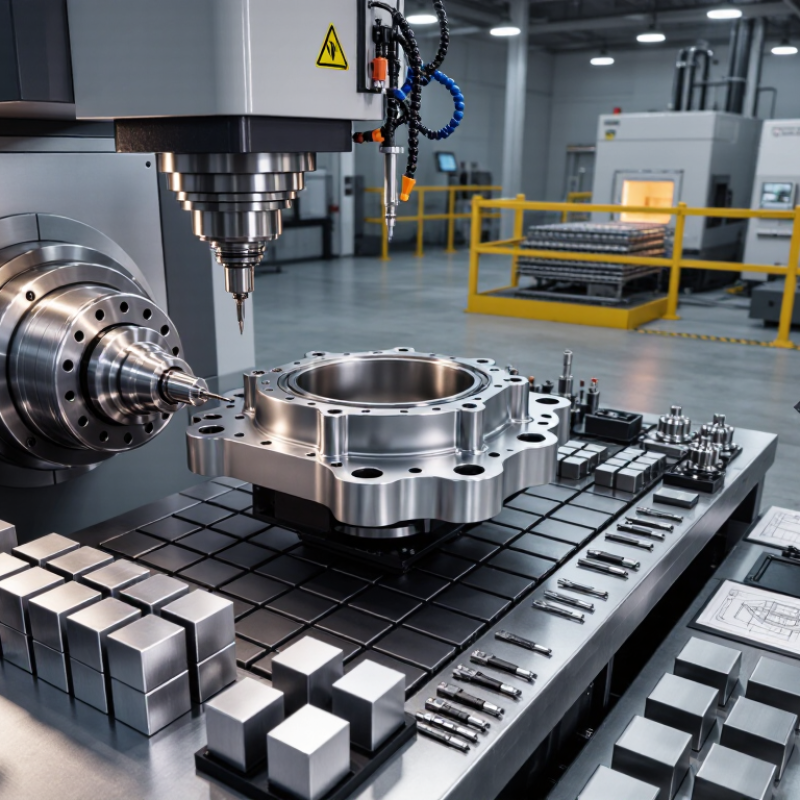
Understanding Oil and Gas CNC Machining Requirements
Oil and gas CNC machining begins with service conditions, not the machine list. Components may face high pressure, sour gas, saltwater, vibration, and repeated thermal changes. A supplier must understand these risks before quoting tolerances or materials. Ask for the pressure range, operating temperature, fluid chemistry, load direction, and expected service life. Small details matter. A valve body and a pump shaft need different inspection plans.
Material certificates, heat-treatment records, and traceable batch numbers should follow each critical part. This evidence shows whether the supplier controls the process, rather than simply promising quality.
Machining requirements should define alloy behavior, dimensional tolerances, surface finish, thread forms, and sealing areas. Some corrosion-resistant alloys work harden quickly, so tooling, cutting speed, and coolant control require practical experience. On a production floor, an engineer should explain how these choices protect the part. Vague answers deserve questions. Ask for inspection methods, calibrated equipment, and sample reports using applicable industry standards. Coordinate measuring machines, hardness testing, and non-destructive examination may be necessary for safety-critical components. Not every part needs every test, though excessive inspection can increase cost without improving reliability.
A dependable supplier also reviews drawings for manufacturability and realistic tolerances. I have seen projects delayed by a tight tolerance that served no functional purpose. That mistake is easy to repeat. Clear revision control, documented corrective actions, and honest delivery updates reveal operational maturity. Request a small trial batch when risk is high. Examine dimensions, surface condition, packaging, and traceability before expanding production. The best supplier is not always the cheapest. It is the one that can explain decisions, prove consistency, and admit uncertainty before it becomes a field failure.
Evaluating Supplier Expertise, Certifications, and Industry Experience
Choosing the best oil and gas CNC machining supplier requires more than comparing hourly rates. Examine their experience with pressure-containing parts, valve bodies, flanges, and corrosion-resistant alloys. Ask how they control tight tolerances during long production runs. A capable supplier should explain its inspection process clearly, not hide behind general promises.
Certifications provide useful evidence, but they are not the whole answer. Confirm whether the quality system follows ISO 9001 and whether relevant industry standards apply to your components. Request current certificates, calibration records, material certificates, and sample inspection reports. Reliable suppliers maintain heat-number traceability from incoming material to final shipment. Their coordinate measuring machines should have documented calibration schedules. Small details matter.
Look for evidence of real industry experience. Review anonymized case studies, machining capacity, engineering support, and responses to difficult drawings. Can the team identify weak tolerances or unclear datums before production begins? That conversation often reveals more than a sales presentation. Ask about nonconformance handling, too. Mistakes can happen. The important question is whether the supplier investigates the cause and prevents repetition. A polished website proves little. An honest technical discussion proves more. Still, certification alone cannot guarantee perfect workmanship, so an on-site audit or trial order may be worth the time.
Assessing CNC Equipment, Materials, and Manufacturing Capabilities
Choosing an oil and gas CNC machining supplier requires more than reviewing a machine list. Equipment must match the part’s size, tolerance, and production volume. During supplier evaluations, inspect machining centers, turning capacity, spindle condition, and measurement systems. Ask how often operators verify calibration.
Capability matters on the shop floor. A supplier should machine corrosion-resistant alloys, stainless steels, nickel-based materials, and suitable engineering plastics. Each material reacts differently to heat, cutting pressure, and tool wear. Request sample inspection reports showing dimensional results, surface finish, and thread accuracy. A clean report is useful, but raw inspection data is more convincing.
Look for controlled processes from drawing review to final packing. Experienced teams should explain workholding, tool selection, coolant control, and traceability without vague promises. They should also identify risks before production begins. Small issues, such as burrs inside a narrow bore, can affect assembly later.
Ask to see actual production evidence.
A supplier may claim tight tolerances, yet struggle with repeatability across several batches. I have found that honest communication about limitations often indicates stronger reliability than perfect sales language. Still, do not ignore gaps. Check whether the supplier can manage first-article inspection, in-process checks, material certificates, and nonconformance records. A capable partner should provide clear corrective actions when results miss the target. Mistakes happen. Hidden mistakes are the real concern.
How to Choose the Best Oil and Gas CNC Machining Supplier?
Assessment of CNC equipment, materials, quality systems, and manufacturing capabilities
The chart presents a practical 100-point evaluation model for oil and gas CNC machining suppliers. Higher-weighted criteria reflect capabilities that commonly affect dimensional accuracy, material performance, traceability, repeatability, and production reliability. Buyers should verify each score through audits, inspection records, material certificates, and sample production.
Reviewing Quality Control, Testing, and Regulatory Compliance
Choosing an oil and gas CNC machining supplier requires more than comparing prices. Quality control must be visible on the workshop floor.
Ask how the supplier controls incoming materials, machining parameters, and final dimensions. A reliable team should provide material certificates, heat numbers, and full traceability. Inspectors should use calibrated micrometers, gauges, and coordinate measuring machines. Calibration records must be current, not simply stored in an old file.
Testing should match the component’s actual service risks. Pressure testing can reveal leaks in valves, manifolds, and fittings. Non-destructive testing may identify cracks that machining measurements cannot detect. Depending on the part, suitable methods include ultrasonic, magnetic particle, dye penetrant, or radiographic inspection. Request test procedures, acceptance criteria, and signed reports. Photos of marked parts can add useful evidence.
Regulatory compliance also deserves careful review. The supplier should understand applicable industry standards, customer specifications, export requirements, and safety documentation. Check whether procedures are controlled and whether workers receive documented training. An audit may reveal an uncomfortable gap between written procedures and daily practice. That gap matters. I would also examine how nonconforming parts are isolated, investigated, and corrected. One missed revision on a drawing can affect an entire batch. A supplier may hold impressive certificates yet still lack disciplined communication. Ask for sample inspection plans, production records, and corrective-action reports before approving the first order.
Comparing Costs, Lead Times, Communication, and Long-Term Support
How to Choose the Best Oil and Gas CNC Machining Supplier?
Cost is only the opening figure. Compare the complete cost of ownership, including inspection, packaging, rework, and freight. A cheaper quote may hide weak process control. Ask for material certificates, dimensional reports, and sample inspection records. Deloitte’s 2024 Global Smart Manufacturing Survey found that 92% of manufacturers view smart manufacturing as important for competitiveness. Digital traceability now matters, even for a small valve component.
Tips: Request three comparable quotations. Confirm tolerances, alloys, batch size, and inspection standards. Ask how suppliers handle engineering changes. A clear answer is valuable.
Lead time should be measured from drawing approval to shipment. Request a production schedule with machining, inspection, and contingency dates. Communication often reveals operational maturity. Can the supplier explain a delay within one working day? Can engineers discuss tool wear, surface finish, and tolerance risks directly? The 2024 MHI Annual Industry Report reported that 55% of supply chain leaders planned to increase technology investment. Better visibility can reduce avoidable surprises, but software cannot replace experienced judgment.
Long-term support deserves equal attention. Review capacity, backup equipment, calibration practices, and corrective-action procedures. Ask whether the supplier can maintain the same quality after volume increases. In my experience, this question is often missed. It should not be. A reliable partner shares evidence, admits limitations, and improves after a failed trial. None of these signals guarantee perfection. They make the risk easier to manage.
| Supplier Profile | Typical Cost Level (USD/hour) |
Prototype Lead Time | Production Lead Time | Quality and Certification Coverage | Communication and Project Management | Long-Term Support | Best Fit |
|---|---|---|---|---|---|---|---|
| Profile A: Local Precision Shop | $75–$120 | 5–10 business days | 3–6 weeks | First-article inspection, dimensional reports, material certificates, and traceability commonly available. ISO 9001 may be available depending on facility size. | Same-time-zone communication, direct access to engineers, and fast clarification of drawings or tolerances. | Strong engineering interaction and repeat-order support; capacity may be limited during peak periods. | Urgent prototypes, complex revisions, and low-to-medium production volumes |
| Profile B: Mid-Size Certified Manufacturer | $55–$95 | 7–14 business days | 4–8 weeks | Formal quality system, inspection plans, calibrated measuring equipment, full material traceability, and documented nonconformance procedures. | Dedicated project coordinator, scheduled progress updates, and structured engineering change control. | Reliable repeatability, spare-part planning, production records, and stable support for multi-year supply agreements. | Oil and gas components requiring balanced cost, quality, and delivery reliability |
| Profile C: High-Capacity Regional Facility | $45–$80 | 10–18 business days | 5–10 weeks | Advanced inspection capability, process documentation, batch traceability, and customer-specific quality plans generally available. | Professional purchasing and production teams; communication is usually organized but less direct with machinists. | Good machine availability, scalable production, and scheduled maintenance support; engineering changes may require formal approval cycles. | Medium-to-high production volumes and standardized component families |
| Profile D: Specialized Heavy-Machining Facility | $90–$160 | 12–25 business days | 6–12 weeks | Suitable for large-diameter parts, difficult alloys, tight tolerances, weld-overlay requirements, and detailed inspection documentation. | Engineering-led communication with technical review meetings; quotation and design review may take longer because of process complexity. | Strong support for repair machining, reverse engineering, field service requirements, and long-life equipment programs. | Large, heavy, high-value, or technically demanding oil and gas parts |
| Profile E: International Cost-Focused Supplier | $30–$65 | 15–30 business days | 8–16 weeks including logistics | Inspection reports and material documentation can be provided, but certification scope, process control, and traceability should be verified before approval. | Communication may involve different time zones and languages; response times of 1–2 business days are common unless an assigned coordinator is provided. | Competitive pricing and broad capacity; warranty handling, replacement logistics, and technical changes should be defined contractually. | Cost-sensitive projects with predictable schedules and well-controlled specifications |
| Profile F: Rapid-Response Job Shop | $85–$140 | 2–7 business days | 2–5 weeks | Basic inspection and material documentation are usually available; advanced certification may require additional lead time and cost. | Very fast quotation and direct communication, often with flexible approval of drawing updates and manufacturing changes. | Excellent for emergency replacement parts and shutdown work; long-term capacity can fluctuate because of limited resources. | Breakdown repairs, maintenance shutdowns, and critical replacement components |
FAQS
Look for experience with pressure-containing parts, valve bodies, flanges, and corrosion-resistant alloys. Practical experience matters more than polished sales language.
Request current ISO 9001 certificates, material certificates, calibration records, and sample inspection reports. Small details matter.
Ask whether heat numbers remain traceable from incoming material to final shipment. This creates a clear record for each component.
Ask about inspection frequency, coordinate measuring machine calibration, tool-wear monitoring, and documented process controls. The answer should include specific methods.
Review anonymized case studies, machining capacity, engineering support, and responses to difficult drawings. Certification alone cannot guarantee perfect workmanship.
Compare inspection, packaging, rework, freight, and production costs. A low quote may hide weak process control.
Measure lead time from drawing approval to shipment. Request dates for machining, inspection, and contingency planning.
Ask whether delays receive explanations within one working day. Engineers should discuss tool wear, surface finish, and tolerance risks directly.
Review backup equipment, capacity, calibration practices, and corrective-action procedures. Ask whether quality will remain stable after volume increases.
It can reduce uncertainty, especially for complex components. Try a small batch. Not foolproof, but useful.
Conclusion
Choosing the right Oil and gas CNC machining supplier requires a careful review of both technical capabilities and long-term reliability. Start by defining your project requirements, including part specifications, material selection, tolerances, production volume, and operating conditions. Then evaluate each supplier’s industry experience, engineering expertise, certifications, and ability to manufacture components for demanding oil and gas applications. Their CNC equipment, material processing range, machining capacity, and ability to handle complex or large parts should align with your project needs.
Quality control is equally important. Review inspection systems, testing procedures, traceability practices, and compliance with applicable industry and regulatory standards. Finally, compare quotations based on total value rather than price alone, considering lead times, production flexibility, communication, technical support, and after-sales service. A dependable supplier should provide clear documentation, consistent quality, realistic schedules, and responsive collaboration throughout the project. Selecting a partner with strong capabilities and transparent processes can help reduce risk, improve efficiency, and support reliable long-term performance.
Blog Tags: