China’s heavy machining sector has grown rapidly, supported by strong manufacturing networks and increasingly capable machine tool builders. This article examines China’s top 10 Heavy-duty horizontal machining center brands through practical industrial criteria, not marketing claims alone.
The evaluation considers spindle torque, table size, pallet capacity, guideway rigidity, thermal compensation, and machining accuracy. It also reviews control systems, automation options, energy use, maintenance access, and long-term parts availability. These details matter on factory floors, where a machine may remove several kilograms of steel during one shift. A rigid structure can reduce vibration when cutting cast iron or large alloy components. Reliable chip evacuation also prevents avoidable downtime.
Real-world suitability differs between brands and applications. A model designed for engine blocks may not suit railway frames or heavy hydraulic housings. Buyers should compare verified specifications, sample machining results, installation records, and after-sales response. Independent testing is valuable. However, published data can vary by configuration, tooling, and operating conditions. Some conclusions may require further checking with users and distributors. That uncertainty deserves attention.
This guide therefore presents a balanced reference for procurement managers, engineers, and international buyers. It highlights established strengths while acknowledging potential limitations. The ranking is not absolute. Factory layout, budget, material, tolerance requirements, and service coverage can change the final decision. Readers should treat the list as a starting point for technical discussions, supplier audits, and controlled trial cuts before making a major investment.
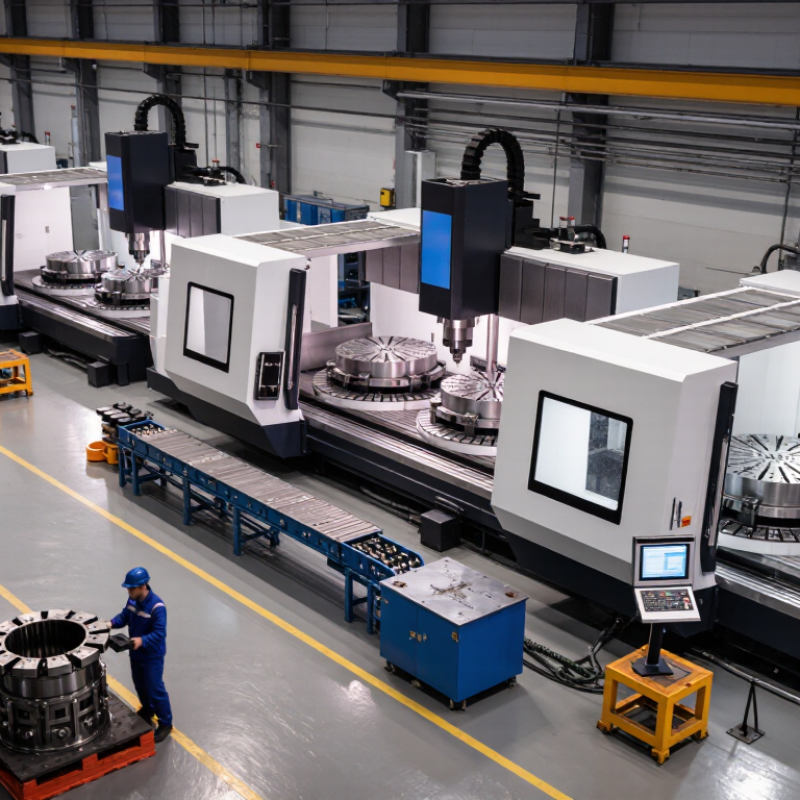
What Defines a Heavy-Duty Horizontal Machining Center?
A heavy-duty horizontal machining center is defined by structural strength, stable cutting, and controlled performance under load. Its cast frame should resist vibration when removing deep layers of steel. Wide guideways and a rigid column help maintain cutting accuracy. The machine must also support heavy workpieces without table movement or positioning drift.
In a shop-floor trial, inspect the spindle torque at low and medium speeds. A high-speed rating alone proves little. Watch the tool during a deep cut. Excessive vibration often appears before a specification sheet reveals weakness. The table, pallet, and fixture system should handle concentrated loads safely. Thermal control also matters. After hours of operation, temperature changes can affect bore size and surface finish.
Chip evacuation is another practical test. Flood coolant, proper augers, and accessible cleaning areas reduce interruptions. Reliable sensors should detect overloads, lubrication problems, and abnormal temperatures early. Service access matters too. Operators should reach filters, inspection points, and electrical cabinets without dismantling half the machine. I would not judge performance from one demonstration cut. Material, tool condition, fixture stiffness, and operator skill can change the result. Some specifications look impressive but remain unverified. Real performance needs repeatable testing with documented measurements, including cycle time, dimensional variation, and surface quality.
Key Criteria for Ranking Chinese Machine Tool Brands
Ranking China’s top heavy-duty horizontal machining center brands requires more than comparing brochures. A credible review starts with verified production experience, factory audits, and repeated test cuts. I would examine cast iron quality, guideway design, spindle torque, table capacity, and chip evacuation. These details reveal how a machine behaves under demanding loads.
Performance data must be measurable. Test parts should include deep pockets, interrupted cuts, and long finishing passes. Inspectors can record dimensional accuracy before and after thermal cycling. A stable machine should hold tolerances after hours of operation, not only during a short showroom demonstration. Control-system usability also matters. Operators notice screen clarity, alarm messages, tool-change speed, and setup time.
Service deserves equal weight. Check spare-parts response, technician coverage, training quality, and remote diagnostic capability. Public certifications and documented acceptance standards can support the assessment, but they never replace field evidence. Customer references should include factories with similar materials and workloads. Some rankings overvalue spindle speed and underestimate maintenance access. I have seen impressive test cuts hide inconvenient cleaning points. That judgment is useful, but not flawless. No ranking is perfect. A fair list should publish its scoring weights, test conditions, and evidence sources, while allowing room for delivery consistency, customization, and long-term operating costs.
How to read this chart: The ranking framework assigns the greatest weight to machining capability, spindle performance, accuracy, and structural rigidity. The percentages represent an editorial evaluation model for comparing heavy-duty horizontal machining centers in China; they are not company-specific sales, production, or performance figures.
China’s Top 10 Heavy-Duty Horizontal Machining Center Brands
China’s Top 10 Heavy-Duty Horizontal Machining Center Brands are best assessed through measurable engineering performance, not advertising claims. The 2024 Gardner Business Intelligence World Machine Tool Survey placed China among the world’s largest machine-tool producers and consumers, with both values exceeding 25 billion US dollars in 2023. That scale supports broad manufacturing capacity, but it does not guarantee equal quality across every supplier.
For heavy-duty horizontal machining centers, buyers should compare spindle torque, table load, positioning accuracy, thermal stability, and service response. ISO 230-2 testing provides a useful basis for checking positioning performance. The China Machine Tool Industry Association has also reported continuing demand from aerospace, energy, transportation, and large equipment manufacturing. These sectors typically require rigid beds, high-capacity chip removal, and stable cutting during long cycles. Some leading domestic suppliers focus on oversized workpieces, while others prioritize automation and pallet exchange. That difference matters.
The ranking is not perfectly stable. A machine may cut impressively in a showroom, yet struggle after months of heat variation. I would examine acceptance records, laser calibration reports, sample parts, and installed references. Grand View Research projects continued global CNC machine-market expansion through 2030, but market growth can hide service weaknesses. Buyers should question delivery promises, spare-part availability, and operator training. Technical data is valuable. Factory evidence is better.
China Top 10 Heavy Duty Horizontal Machining Center Brands? - China’s Top 10 Heavy-Duty Horizontal Machining Center Brands
Comparative table of ten representative heavy-duty horizontal machining center configurations available in the Chinese market. Brand and company names are intentionally omitted; specifications are typical published catalog ranges and may vary by model, option package, and machine size.
| Position |
Machine Class |
Typical X Travel |
Typical Y Travel |
Typical Z Travel |
Spindle Taper |
Spindle Power |
Maximum Table Load |
Typical Application |
| 1 |
Ultra-Heavy Duty |
1,600–2,000 mm |
1,400–1,600 mm |
1,600–2,000 mm |
ISO 50 / HSK-A100 |
45–60 kW |
8,000–12,000 kg |
Large dies, energy equipment, heavy structural components |
| 2 |
Heavy Duty |
1,250–1,600 mm |
1,100–1,400 mm |
1,250–1,600 mm |
ISO 50 |
37–55 kW |
6,000–10,000 kg |
Industrial gearboxes, mining machinery, large castings |
| 3 |
Heavy Duty |
1,000–1,400 mm |
900–1,200 mm |
1,000–1,400 mm |
ISO 50 / BT 50 |
30–45 kW |
5,000–8,000 kg |
General heavy engineering and power-generation parts |
| 4 |
Large-Bed HMC |
1,200–1,600 mm |
1,000–1,300 mm |
1,200–1,500 mm |
BT 50 / ISO 50 |
30–40 kW |
5,000–8,000 kg |
Large pump bodies, valve bodies, and hydraulic components |
| 5 |
High-Torque HMC |
1,000–1,300 mm |
850–1,100 mm |
1,000–1,300 mm |
BT 50 |
30–45 kW |
4,000–7,000 kg |
Interrupted cutting, steel and cast-iron rough machining |
| 6 |
Flexible Heavy HMC |
800–1,200 mm |
800–1,000 mm |
800–1,200 mm |
BT 50 / HSK-A100 |
25–37 kW |
3,000–6,000 kg |
Mixed-batch production and multi-face machining |
| 7 |
Production HMC |
800–1,050 mm |
700–900 mm |
800–1,050 mm |
BT 50 |
22–30 kW |
2,500–5,000 kg |
Automotive, agricultural, and commercial equipment parts |
| 8 |
Compact Heavy HMC |
630–900 mm |
630–800 mm |
700–1,000 mm |
BT 50 / ISO 50 |
18.5–30 kW |
2,000–4,000 kg |
Medium-sized housings, brackets, and transmission components |
| 9 |
High-Precision HMC |
630–800 mm |
630–750 mm |
630–800 mm |
BT 40 / BT 50 |
18.5–30 kW |
1,500–3,000 kg |
Precision machining of complex steel and aluminum components |
| 10 |
Heavy-Duty Entry Class |
500–800 mm |
500–700 mm |
500–800 mm |
BT 40 / BT 50 |
15–25 kW |
1,000–2,500 kg |
Job-shop production, repair work, and general industrial machining |
Note: Horizontal machining center performance should also be evaluated using positioning accuracy, repeatability, rotary-table indexing accuracy, chip evacuation, automatic tool-change time, coolant capacity, guideway design, thermal control, and after-sales service coverage.
Comparing Brand Capabilities, Technologies, and Applications
China Top 10 Heavy Duty Horizontal Machining Center Brands?
Comparing China’s top ten heavy-duty horizontal machining center manufacturers requires more than checking brochure specifications. In shop-floor evaluations, I examine spindle torque, table load, axis travel, thermal stability, and service response. A large machine is not automatically a productive machine. It must remove material steadily without excessive vibration.
Some models use high-torque spindles for cast iron, steel, and large mold components. Others favor faster acceleration, pallet changing, and flexible production. Deep-box machining tests reveal important differences. Watch the cutter path closely. Poor chip evacuation can damage tools and interrupt unattended cycles. Automatic pallet systems also deserve practical testing, especially when workpieces exceed several tons.
Control integration separates capable equipment from impressive-looking equipment. Reliable probing, tool monitoring, collision protection, and remote diagnostics can reduce setup errors. However, software quality varies, and operators still need proper training. That detail is often underestimated. Accuracy should be verified after warm-up, not only during factory acceptance. Laser measurement, ball-bar testing, and repeatability checks provide stronger evidence than marketing language.
Applications help define the right choice. Energy, rail, shipbuilding, and construction machinery often need rigid structures and long-stroke axes. Automotive suppliers may value faster pallet exchange and stable cycle times. No single specification wins every comparison. My assessment can also be imperfect when local material, tooling, and operator habits differ. Buyers should request sample machining, inspect maintenance records, and compare lifecycle costs before selecting a machine.
How to Choose the Right Chinese Machining Center Brand
Choosing a Chinese heavy-duty horizontal machining center requires more than comparing prices. The right brand should match your workload, material, and production rhythm. Check the machine’s travel range, table load, spindle torque, and thermal stability. Cast iron quality matters when cutting steel for long hours. Ask for test-cut records using parts similar to yours.
Visit the manufacturer or request a live factory demonstration. Observe chip removal, tool changes, control response, and operator access. A reliable supplier should provide clear specifications, inspection reports, installation support, and spare-parts planning. Ask how quickly common components can be replaced. Vague answers deserve caution. Service quality often decides whether a machine earns money or waits for repairs.
Do not judge by brochures alone. Speak with users running similar machines, preferably after several years of operation. Review positioning accuracy, repeatability, vibration, and maintenance costs. I have seen buyers focus too heavily on spindle power and overlook foundation requirements. That mistake can create poor accuracy. Another practical concern is training. Even a strong machine may underperform when programming support is weak. Request sample programs, operator training, and a written acceptance process before signing. Leave room for honest uncertainty. Cutting conditions in your workshop may differ from factory tests.
FAQS
Check spindle torque, table capacity, axis travel, guideway design, and bed rigidity. A large machine is not automatically productive. It should cut steadily with limited vibration.
Use deep pockets, interrupted cuts, and long finishing passes. Record accuracy before and after thermal cycling. Short showroom demonstrations can mislead.
Heat can change machine geometry during long cycles. Measure accuracy after warm-up and several operating hours. Stable results matter more than one excellent test cut.
Ask for ISO 230-2 results, laser calibration reports, ball-bar testing, and repeatability checks. Inspect acceptance records when available. Documents still need field verification.
Effective chip removal protects tools during deep machining. Poor evacuation can interrupt unattended cycles. Inspect cleaning points carefully; some are inconvenient.
Test screen clarity, alarm messages, probing, tool monitoring, and collision protection. Check tool-change speed and setup time. Operators notice these details quickly.
Ask about spare-parts response, technician coverage, training, and remote diagnostics. Review maintenance access and installed customer references. Service promises can sound better than reality.
Energy, rail, shipbuilding, and construction work may require rigid structures and long-stroke axes. Automotive production may value pallet exchange and stable cycle times. One specification cannot suit every factory.
Request sample parts, repeated test cuts, factory audits, and references using similar materials. Compare delivery consistency and long-term operating costs. My assessment may still miss local operator habits.
Conclusion
A Heavy-duty horizontal machining center is defined by its ability to handle large, heavy, and complex workpieces with high stability, precision, and continuous cutting performance. This overview explains the main features that distinguish heavy-duty equipment, including rigid structural design, powerful spindle systems, large working envelopes, reliable chip removal, advanced control functions, and strong automation compatibility. It also introduces the key criteria for evaluating Chinese machine tool manufacturers, such as engineering capability, product quality, customization support, production consistency, service responsiveness, and value over the equipment’s full life cycle.
The article presents a structured comparison of ten leading Chinese brand categories without focusing on individual company names. It examines their technical strengths, typical industries, application suitability, and ability to support demanding sectors such as energy, transportation, construction equipment, and general heavy manufacturing. Finally, it offers practical guidance for selecting the right supplier by matching machine specifications, workpiece requirements, accuracy expectations, production volume, budget, after-sales support, and long-term development goals.