
China’s machining sector is changing quickly, but choosing equipment still comes down to practical details: accuracy, uptime, service, and the workpiece itself. A 5-axis horizontal machining center can reach multiple faces with fewer setups, while a horizontal spindle and pallet system support efficient production of complex parts. For buyers, those advantages matter only when the machine’s travel, tool capacity, accuracy, and support match the job.
The wider automation trend offers useful context. The International Federation of Robotics reported 541,302 industrial robot installations worldwide in 2023, including 276,288 in China, in its World Robotics 2024 report. These figures describe robot installations, not machining-center sales, so they should not be mistaken for direct evidence of demand for any machine model. Still, they show the scale of industrial automation surrounding modern machine-tool investment. That matters.
This guide compares ten Chinese manufacturers and their horizontal machining-center offerings through practical criteria, including configuration options, application fit, technical specifications, and service considerations. “Top 10” is an editorial shortlist, not an official sales ranking; model specifications can also vary by configuration and market. A brochure may promise impressive speed. The details deserve a closer look. Readers should verify current specifications, factory capabilities, and local support directly with each supplier before making a purchasing decision.
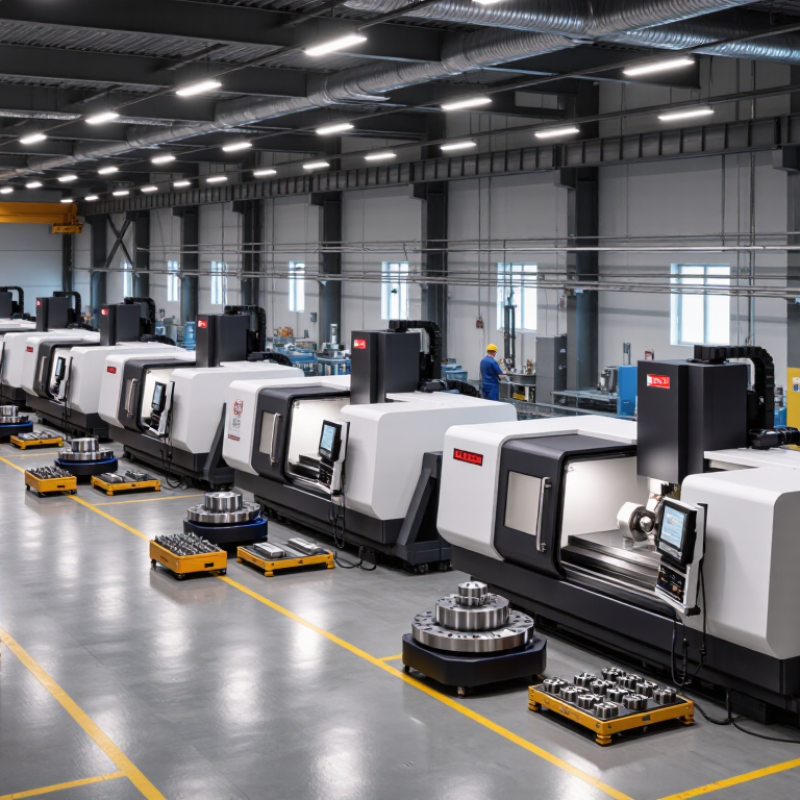
A 5-axis horizontal machining center combines a horizontal spindle with three linear axes and two rotary axes. The spindle cuts from the side, while a rotary table or trunnion positions the workpiece. This arrangement can reach several faces without repeated manual reclamping. That saves setup time. It can also reduce alignment errors between operations.
Axis count alone can mislead. A machine may use two rotary axes to index a part, then cut with its linear axes; this is often called 3+2 machining. Simultaneous five-axis machining moves all five axes during a cutting path, useful for contours and angled surfaces. The distinction matters when comparing equipment. In its 2024 World Machine Tool Survey, Gardner Intelligence put global machine-tool consumption at about $82.7 billion for 2023. That figure covers the wider machine-tool market, not five-axis horizontal machines alone. Buyers should also check spindle access, rotary-axis travel, pallet capacity, and the workpiece envelope. A spec sheet cannot show every collision risk. Honestly, I would not judge a machine by axis count alone. Test the actual part, tools, and fixture before deciding.
Evaluating a Chinese 5-axis horizontal machining center starts with the work it must perform. Check the part envelope, pallet size, tool capacity, and required cycle time against your actual jobs. Confirm that the rotary axes can reach critical features without awkward repositioning. Ask for positioning and repeatability data, then verify how those figures were measured. Numbers can mislead.
Thermal behavior matters during long production runs. Request a demonstration after the machine has warmed up, not only during a brief, polished cycle. Inspect chip evacuation around the pallet and fixtures; trapped chips can affect seating and surface quality. Test it cold, too. A sample cut should use your material, tooling, and tolerances where possible. Review the finished part with appropriate measurement equipment, rather than judging it by appearance alone.
Also evaluate the control interface, probing routines, maintenance access, and local technical support. Ask how quickly common wear parts can be supplied and what training is included. Review service records or references from shops running similar materials and workloads. A factory acceptance test is useful, but it cannot predict every shop-floor issue. I would still reserve time for an installation trial; that step is easy to underestimate. Look for clear documentation, consistent test results, and candid answers about limitations before comparing price.
China’s top 10 5-axis horizontal machining centers are best compared by what they can produce, not by headline specifications alone. A horizontal spindle and rotary table allow several faces of a part to be machined in one setup. That can reduce handling and help maintain alignment across complex components. In practice, the useful details are often less dramatic: table size, pallet-change time, tool capacity, and access for chip removal.
Look closely at the working envelope and rotary-axis travel. A large casting may fit on the table but still collide with the spindle head during a tilted cut. Ask for a sample-part demonstration using similar material and tooling. Check how the machine handles coolant, probing, and long chips during extended cycles. Small interruptions matter. A fast spindle is not automatically the best choice if the work mostly involves heavy cuts or long tools.
For a reliable comparison, review positioning accuracy, repeatability, service access, and local technical support alongside cutting performance. Request test results under stated conditions, then confirm them with an actual inspection plan. The ranking can shift with each shop’s workload; that part is not always neat. A machine designed for compact aerospace parts may be a poor fit for large, heavy workpieces. The right shortlist depends on the parts, tolerances, and production rhythm.
Comparing China’s leading 5-axis horizontal machining centers means looking beyond axis count. Most pair a horizontal spindle with a rotary table and coordinated rotary axes. This arrangement can machine several faces in one setup, reducing repositioning and datum errors. It suits complex housings, impellers, and structural components. Setup matters.
The machines differ in work-envelope size, pallet capacity, spindle torque, tool-magazine capacity, and rotary-axis travel. High-torque spindles are useful for steel and heavier cuts; faster spindles often suit aluminum and smaller tools. Larger pallet systems support repeat production, while compact models conserve floor space. Check simultaneous-axis accuracy, thermal control, chip evacuation, and probing options. A rapid-traverse figure alone says little about finished-part quality.
Typical uses include pump and valve bodies, gearbox cases, and intricate components that would otherwise need multiple fixtures. An automotive supplier may value pallet automation and steady cycle times. A job shop making varied parts may prefer flexible tooling and accessible programming. Match the machine to the part, material, and production volume—not a headline specification. One limitation of any comparison is that published figures rarely reveal real cutting behavior. Request a representative test cut, and inspect the finished surfaces. It depends.
A qualitative comparison of ten representative machine configurations and the applications they typically suit. Scores indicate relative application fit, not measured performance or a ranking of specific models.
Application-fit scale: 1 (limited fit) to 10 (strong fit). Actual capabilities vary by machine specification, tooling, workholding, and process.
Choosing a five-axis horizontal machining center starts with the parts, not the machine’s headline specifications. Record the largest workpiece, its weight, and the features that must be reached in one setup. A casting with deep side pockets may need different axis travel and tool access than a compact aerospace component. Measure twice. Leave room for fixtures, probes, and safe loading.
Match spindle power and torque to the material and cutting strategy. Aluminum production may benefit from high speed, while steel parts often demand steady torque at lower speeds. Check the rotary axes’ load limits and positioning accuracy with the actual fixture installed. A large pallet is useful only if it fits your work envelope and handling process. Bigger is not automatically better.
Consider how the machine will run between shifts. Tool capacity, pallet changing, chip evacuation, and maintenance access all affect real output. Ask for a cutting trial using representative material, tooling, and tolerances; review cycle time and the finished surface, not just a brochure figure. Also compare service response and operator training. One detail is easy to miss: an ambitious automation plan can create bottlenecks if part preparation stays manual. Pilot the workflow before committing to the full cell.
| No. | Machine Configuration | Typical Pallet Size | Approx. Workpiece Capacity (Diameter × Height) |
Typical X/Y/Z Travel | Typical Spindle Speed | Common Tool Capacity | Best-Fit Production Needs | Key Selection Consideration |
|---|---|---|---|---|---|---|---|---|
| 1 | Compact 400 mm pallet, general-purpose | 400 × 400 mm | Up to about 600 × 500 mm | About 600 × 550 × 600 mm | 8,000–12,000 rpm | 40–60 tools | Small housings, valve bodies, and precision components in mixed batches | Check fixture space and tool access around the part, not only the pallet dimensions. |
| 2 | Compact 400 mm pallet, high-speed | 400 × 400 mm | Up to about 600 × 500 mm | About 600 × 550 × 600 mm | 15,000–20,000 rpm | 40–80 tools | Aluminum components, thin-wall parts, and jobs requiring shorter cycle times | Confirm spindle torque at the speeds used for roughing as well as finishing. |
| 3 | 500 mm pallet, balanced production | 500 × 500 mm | Up to about 700 × 600 mm | About 700 × 650 × 650 mm | 8,000–12,000 rpm | 60–120 tools | Automotive components and medium-sized parts produced in repeat batches | Evaluate pallet-change time, workholding options, and access for chip removal. |
| 4 | 500 mm pallet, high-torque | 500 × 500 mm | Up to about 700 × 600 mm | About 700 × 650 × 650 mm | 6,000–10,000 rpm | 60–120 tools | Steel parts, castings, and machining operations with heavier cutting loads | Compare continuous torque, spindle taper, and permissible tool weight. |
| 5 | 630 mm pallet, general-purpose | 630 × 630 mm | Up to about 900 × 800 mm | About 1,000 × 850 × 900 mm | 8,000–12,000 rpm | 60–160 tools | Medium-to-large housings, pump parts, and multi-face machining | Check rotary-axis payload and allowable workpiece center of gravity. |
| 6 | 630 mm pallet, high-speed finishing | 630 × 630 mm | Up to about 900 × 800 mm | About 1,000 × 850 × 900 mm | 12,000–18,000 rpm | 60–160 tools | Aluminum or lighter-alloy parts requiring fine surface finish and high throughput | Review spindle cooling, tool balance requirements, and finishing accuracy under load. |
| 7 | 800 mm pallet, heavy-duty | 800 × 800 mm | Up to about 1,100 × 1,000 mm | About 1,200 × 1,000 × 1,100 mm | 6,000–10,000 rpm | 60–180 tools | Large castings, energy-sector components, and heavy steel workpieces | Confirm table load, foundation requirements, and chip-conveyor capacity. |
| 8 | 800 mm pallet, extended-travel | 800 × 800 mm | Up to about 1,300 × 1,000 mm | About 1,400 × 1,100 × 1,200 mm | 8,000–12,000 rpm | 80–200 tools | Longer workpieces and parts requiring multiple setups or deep machining access | Verify axis reach, tool clearance, and whether the full work envelope is usable with the rotary axis. |
| 9 | 1,000 mm pallet, large-part heavy-duty | 1,000 × 1,000 mm | Up to about 1,400 × 1,200 mm | About 1,600 × 1,300 × 1,400 mm | 6,000–8,000 rpm | 80–240 tools | Large structural parts, heavy machinery components, and low-volume large work | Assess total loaded mass, floor loading, lifting access, and part-change logistics. |
| 10 | 630–800 mm pallet, twin-pallet production cell | Typically 630 × 630 mm or 800 × 800 mm | Depends on pallet size and machine configuration | Typically matched to the selected pallet platform | 8,000–12,000 rpm | 60–200 tools | Repeat production where loading and setup can take place while another pallet is machining | Compare pallet-change time, automation interface, fixture standardization, and operator access. |
Selection note: Actual travel, workpiece capacity, spindle performance, tool capacity, and rotary-axis load vary by machine design and options. Request the exact configuration drawing and verify part size, fixture clearance, cutting loads, accuracy requirements, and automation needs before purchasing.
It combines a horizontal spindle, three linear axes, and two rotary axes. The spindle cuts from the side.
They position the workpiece so several faces can be machined with fewer manual reclamps. That can save setup time and reduce alignment errors.
In 3+2 machining, the rotary axes position the part before cutting. Simultaneous machining moves all five axes during the cutting path.
Check spindle access, rotary-axis travel, pallet capacity, and the workpiece envelope. A spec sheet cannot reveal every collision risk.
Ask how positioning and repeatability figures were measured. Then test a sample part using suitable measuring equipment. Numbers can mislead.
Thermal behavior can change during long production runs. Compare a warm demonstration with a cold test. Test it cold.
Use your material, tooling, and tolerances where possible. Check chip evacuation around the pallet and fixtures; trapped chips can affect seating and surface quality.
Ask about maintenance access, training, documentation, and delivery times for common wear parts. References from similar shops help, though they cannot predict every issue.
It is useful, but it cannot reproduce every shop-floor condition. Reserve time for an installation trial; I would not skip that step.
This article explains what distinguishes a 5-axis horizontal machining center, including its horizontal spindle arrangement and ability to machine multiple sides of a workpiece with fewer setups. It outlines practical criteria for evaluating machines made in China, such as axis travel, accuracy, rigidity, spindle performance, automation options, control systems, service support, and overall operating costs. These factors help buyers look beyond specifications and assess how a machine may perform in real production conditions.
The article then presents ten Chinese 5-axis horizontal machining centers and compares their features, capabilities, and typical applications, from complex-part machining to high-volume production. It concludes with a practical selection framework: match workpiece size and materials to machine capacity, consider required tolerances and production volume, and weigh automation needs, available floor space, maintenance, and budget. The goal is to help manufacturers identify a suitable machine for their workflow rather than choose solely by price or headline specifications.