
CNC Machining Insights & Technical Blog
Explore expert guides, engineering innovations, and industry developments from Nanjing Fortis Storage Equipment Manufacturing Co., Ltd.
What Is the Best Stationary Part Machining Center from China?
Table of Contents
Choosing the best Stationary part machining center from China requires more than comparing spindle speed or purchase price. Buyers must examine rigidity, thermal stability, workholding accuracy, control software, service response, and long-term operating cost. A machine may look impressive under showroom lights, yet produce inconsistent holes after hours of cutting. That detail matters.
Gardner Intelligence’s World Machine Tool Survey reported global machine-tool consumption at approximately US$81.9 billion in 2023. Deloitte’s 2024 Smart Manufacturing Survey also found that 86% of manufacturers expect smart manufacturing to become a major competitiveness driver within five years. These figures show strong investment, but they do not identify the right machine for every factory. Application fit remains decisive.
Professor Yusuf Altintas, a leading authority in machining dynamics, has stated, “The objective of manufacturing is to produce quality products at minimum cost.” This principle is especially relevant when evaluating Chinese equipment. A reliable center should hold tight tolerances, reduce setup changes, and support stable chip evacuation across repeated batches. Look closely at the details. Ask for test-cut data, volumetric accuracy results, spindle-load records, and references from comparable plants.
There is no universal winner. That is the uncomfortable part. A compact three-axis model may outperform a premium five-axis machine for simple, repeatable components. Conversely, a low-priced machine can become expensive through downtime, rejected parts, and delayed support. This guide compares leading Chinese manufacturers through measurable performance, engineering depth, after-sales capability, and verified user experience. Claims still require checking.
What Is a Stationary Part Machining Center?
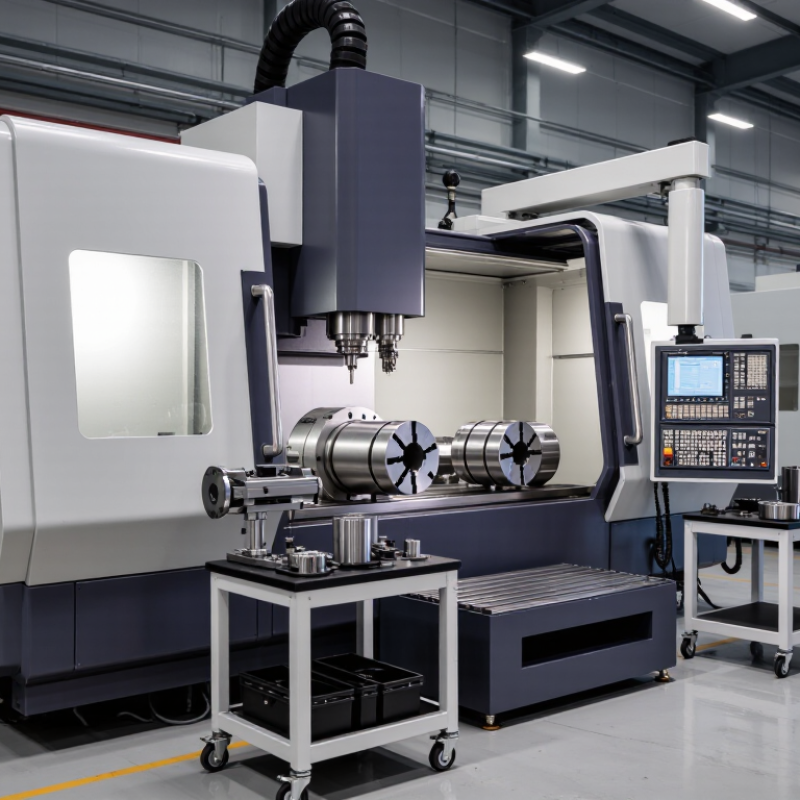
A stationary-part machining center holds the workpiece in place while the cutting tool moves along programmed axes. This arrangement suits large, heavy, or awkward components that are difficult to rotate, such as machine frames, molds, and energy-equipment housings. The machine may use a bridge or gantry structure, with a spindle traveling over the fixed part. That matters. The setup can reduce repositioning, but accuracy still depends on the frame, fixture, spindle, and thermal control. A fixed workpiece does not guarantee a precise result.
When assessing a machine made in China, check its usable travel, load capacity, spindle performance, positioning specifications, tool changing, probing, and chip removal. Ask how accuracy is tested across the full working area, not only near the spindle’s home position. One limitation: “stationary-part” describes an arrangement, not one universal machine specification. The International Federation of Robotics’ World Robotics 2024 report recorded 4,281,585 industrial robots in operation worldwide in 2023, with 541,302 installed that year. This does not prove automation is essential for every shop, but it makes robot interface and fixture access worth checking. A practical trial cut is still valuable. Brochure numbers can look convincing; real parts sometimes disagree.
How Stationary Part Machining Centers Work
A stationary-part machining center holds the workpiece firmly while the cutting head moves around it. This layout is useful for long, heavy, or delicate parts that are difficult to rotate. A bridge or gantry may travel along the machine bed, while the spindle moves vertically and across the work surface. The exact arrangement depends on the machine’s design and working envelope.
The part stays put. The CNC controller reads the programmed tool path and coordinates the machine’s axes. A spindle turns the selected cutter, removing material in controlled passes. Coolant helps manage heat and carries chips away from the cutting area. Tool changes may happen automatically, allowing several operations—such as milling, drilling, and boring—without unclamping the workpiece. Stable clamping matters: even slight movement can affect dimensions or surface finish.
Fixed workholding does not guarantee accuracy. A common oversight is choosing a machine by travel size alone, without checking spindle reach, rigidity, thermal control, and fixture access. For a machine sourced from China, compare documented positioning accuracy with repeatability, and ask how figures were measured. A sample cut can reveal chatter, chip buildup, or awkward tool access that a specification sheet misses. These details are easy to overlook.
Which Specifications Define Machining Center Performance?
A stationary-part machining center should be judged by measured accuracy, repeatability, thermal stability, and cutting capacity—not spindle speed alone. ISO 230-2:2014 describes tests for positioning accuracy and repeatability on each axis. ISO 10791-7:2020 covers accuracy checks using machined test pieces. These standards make supplier data more comparable, though workshop conditions still affect results. A neat brochure number is not enough.
Ask for the test conditions and raw results. For a buyer’s example acceptance sheet, an axis target might be ±0.008 mm positioning accuracy and 0.005 mm repeatability; these are example requirements, not universal benchmarks. Check them across the full travel, after warm-up, and with the intended load. For spindle performance, request power and torque curves, not just maximum rpm. A steel cut may need torque at low speed, while a small aluminum tool benefits from higher speed. Watch thermal drift, too: a machine that shifts after hours of cutting can spoil a close-fitting bore. I would still question any result taken only in a cool showroom. Real production is less tidy.
How to Compare Chinese Machining Center Manufacturers
When comparing Chinese machining center manufacturers, start with the machine’s working principle: the part remains stationary while the cutting unit moves. Check travel, spindle torque across the speed range, tool capacity, and the largest part the table can support. Ask for cutting-test results on material similar to yours, not only a brochure cycle time. Small details matter.
The 2019 Deloitte–MAPI Smart Factory Study surveyed 600 manufacturing executives; 86% expected smart-factory initiatives to drive competitiveness within five years. This is not a machine-tool ranking, but it makes controls, data access, and automation readiness worth checking. Ask whether the control system records alarms and machining data, and whether operators can retrieve them without special software. A sleek interface alone proves little.
Compare manufacturers using the same acceptance test, material, tool, and measurement method. Request spindle runout, positioning accuracy, repeatability, and thermal-stability records, then confirm how each figure was measured. Inspect a sample part for finish, dimensional consistency, and chatter marks. Speak with users running similar parts and ask about service response, spare-parts lead times, and installation support. I still give too much weight to polished demonstrations. Real cuts can be less tidy.
How to Select the Best Model for Your Production Needs
Choosing a stationary-part machining center starts with the parts, not the machine brochure. Record the largest workpiece dimensions, weight, material, and tightest tolerance. Include the fixture, because clamps and tombstones also need clearance. A steel housing with deep bores may need different spindle torque and tool reach than a small aluminum plate. Measure real jobs, including the awkward ones.
Match table size and travel to your usual setup, then leave room for occasional larger parts. Too much capacity can consume floor space and budget without improving output. Too little creates workarounds. Unpleasant ones. Check spindle speed, torque across the operating range, tool capacity, and chip evacuation against your materials and cycle times. For multiple faces, compare rotary-axis options and confirm that the added setup complexity is worthwhile.
Ask suppliers in China for machine specifications, inspection records, service arrangements, and a test cut using representative material and tooling. Have the part checked for dimensions and surface finish, not merely whether the machine runs. A quoted accuracy figure needs context: temperature, measurement method, and operating conditions matter. Also confirm electrical requirements, installation space, and access to wear parts. This detail is easy to miss. It may still be worth accepting a slower cycle if changeovers become simpler, but verify that trade-off with a timed production trial.
What Is the Best Stationary-Part Machining Center from China?
The best model depends on the workpiece envelope, required rigidity, production volume, and available floor space. The chart compares representative capability profiles commonly used when selecting a stationary-part machining center.
Reference values are representative machine-tool specifications: compact centers are suited to smaller precision parts, mid-size centers balance flexibility and throughput, and heavy-duty centers support larger workpieces and higher cutting loads. Confirm exact travel, table load, spindle torque, and tool-change performance with the manufacturer before purchase.
FAQS
Check positioning accuracy, repeatability, thermal stability, spindle runout, and cutting capacity. Ask for test conditions and raw results. Numbers without context can mislead.
Different materials need different speed and torque. Steel cutting may need strong low-speed torque, while small aluminum tools often benefit from higher speeds.
Use the same acceptance test, material, tool, and measurement method. Check performance across the full axis travel, after warm-up, and under the intended load.
Record each part’s dimensions, weight, material, and tightest tolerance. Include fixture space. Clamps need clearance too.
Leave room for occasional larger parts, but avoid buying capacity you rarely use. It can take floor space and budget without improving output.
Use material and tooling similar to your production work. Inspect dimensions, surface finish, and chatter marks. A machine simply running proves little.
Ask about response times, spare-parts lead times, installation support, electrical requirements, and access to wear parts. These details are easy to overlook.
Check whether operators can retrieve alarm and machining data without special software. A sleek interface alone proves little.
Yes, if simpler changeovers improve production. Verify the benefit with a timed trial. I would not assume it from a demonstration.
Conclusion
A Stationary part machining center is a CNC system designed to hold the workpiece securely in a fixed position while cutting tools move along programmed paths. This structure can improve stability, dimensional accuracy, surface quality, and repeatability, especially when machining heavy, large, or complex components. Its operation depends on coordinated axes, spindle rotation, tool changes, workholding, coolant delivery, and digital control software.
To evaluate performance, buyers should examine spindle speed and power, axis travel, positioning accuracy, working envelope, table capacity, tool magazine size, control functions, and maintenance requirements. Comparing Chinese machining center manufacturers also requires attention to engineering experience, quality control, customization capability, after-sales support, spare-parts availability, and total operating cost. The best model depends on production volume, material type, part dimensions, tolerance targets, machining complexity, floor space, and budget. A careful comparison of technical specifications and real production needs helps companies select a reliable, efficient, and appropriately configured solution rather than simply choosing the most powerful machine.

Blog Tags: