
Choosing a horizontal machining center is not just a matter of comparing spindle speeds. A 4-axis horizontal machining center can machine multiple faces of a part with fewer setups, depending on its rotary table and workholding. That can help shops reduce handling time and keep critical features aligned. But the machine’s value depends on the parts it will actually run.
This guide highlights seven leading options for 2026 and explains what distinguishes them. It considers practical specifications such as pallet size, spindle capability, tool capacity, work envelope, and chip removal. A deep workpiece, for example, may need generous clearance, while long unattended cycles put greater demands on tool capacity and reliable automation. Small details count. A pallet changer can support continuous production, but it also needs floor space and a sensible loading plan.
Specifications alone do not tell the whole story. Buyers should check available configurations, control systems, local service support, and the cost of required options with each manufacturer. Performance claims can vary by setup, material, and cutting conditions, so published figures are best treated as a starting point. No shortlist is perfect. A capable machine may still be the wrong fit for a shop’s parts, budget, or workflow. The selections below are intended to support a careful comparison, not replace a review of real production needs.
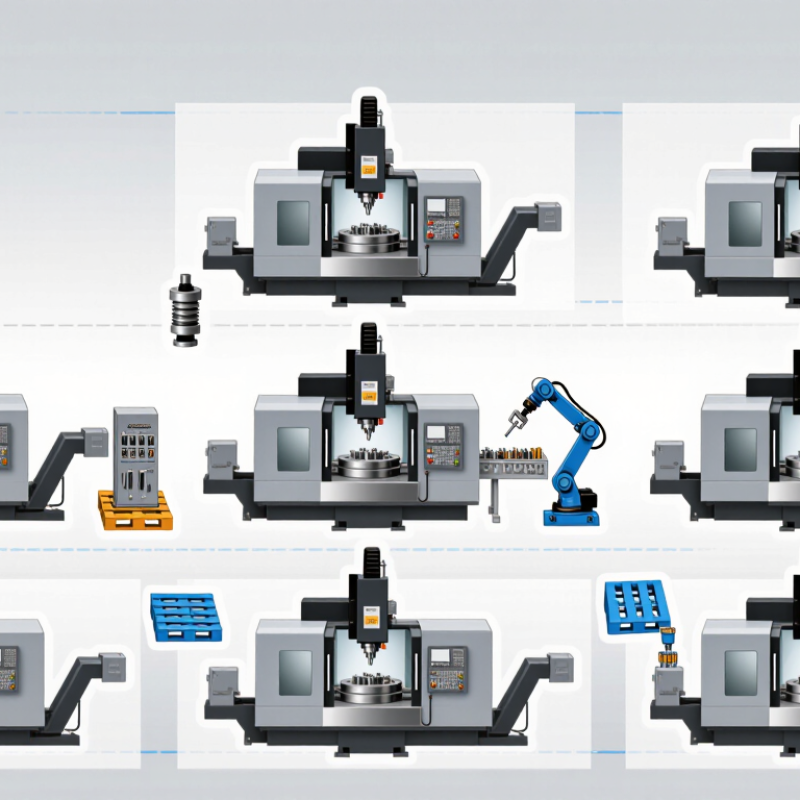
A 4-axis horizontal machining center combines three linear movements with one rotary movement. Its spindle is horizontal, while the workpiece usually sits on a rotary table or indexed fixture. The extra axis lets the cutter reach several faces without removing and reclamping the part. That matters. Every reclamping can introduce alignment error, especially on housings with intersecting bores or mounting faces. The rotary axis may index the part between cuts or move continuously during cutting. Those are different capabilities, so “four-axis” alone does not tell you how the machine will perform.
The horizontal spindle approaches the work from the side, and gravity helps chips fall away from the cutting zone. This can support cleaner machining on deep cavities, though chip evacuation still depends on toolpaths, coolant, and enclosure design. A practical check is whether the rotary table, fixture, and workpiece can clear the spindle and surrounding structures through the required rotation.
The trade-off is easy to overlook: extra reach does not automatically mean better accuracy. Setup stiffness and calibration still matter.
The International Federation of Robotics reported 541,302 industrial robot installations worldwide in 2023 in its World Robotics 2024 report. That figure covers all industrial robots, not machining centers, but it reflects the wider move toward automated production cells. A four-axis machine can fit such a cell, provided its loading and part-change requirements are planned carefully.
A 4-axis horizontal machining center cuts with a spindle oriented horizontally, while the workpiece sits on a rotary table. That table provides the fourth axis, usually rotating around a vertical axis. The machine’s three linear axes move the cutting tool or workpiece along X, Y, and Z. Rotation presents another face to the spindle. One setup. More access.
After clamping the part, the operator sets its position and defines the rotation center in the CNC control. The program can index the table to fixed angles or coordinate rotation with cutting for continuous motion. Indexing suits features on several sides; simultaneous motion supports curved surfaces and angled tool paths.
The horizontal spindle can help chips fall away from the cutting zone, though tool geometry and coolant still matter. Not automatic. A small datum error can shift holes after rotation. A test cut and careful measurement help catch that early. The fourth axis expands tool access, but it cannot correct a weak setup.
When comparing 2026 four-axis horizontal machining centers, start with the part, not the brochure. Check the largest casting you actually run, including fixture height and tool clearance. Then compare pallet dimensions, rotary-table load, and indexing accuracy. A larger work envelope is useful only if the spindle reaches the critical faces without awkward setups.
Look beyond spindle speed. Cutting steel may demand torque at low rpm, while aluminum work often benefits from higher speed and effective chip evacuation. Ask for test data on positioning accuracy and repeatability under stated conditions; ISO 230-2 provides a recognized framework for measuring linear-axis positioning performance. Also compare tool capacity, probing options, thermal compensation, and service access. Small details matter. A chip-packed enclosure can erase promised cycle-time gains.
Connectivity deserves scrutiny, but avoid buying features without a use case. The International Federation of Robotics reported 4,281,585 industrial robots operating worldwide in 2023, in World Robotics 2024, reflecting wider automation adoption. Deloitte and MAPI’s 2024 smart manufacturing survey found that 86% of respondents expected smart manufacturing to be a primary competitiveness driver within five years. These figures support evaluating data access and automation readiness, not assuming every shop needs unattended production. A spreadsheet can still flatter a weak machine; request a cut test using your material, tooling, and fixture.
Seven notable 4-axis horizontal machining centers in 2026 stand out through their capacity, spindle performance, and automation options. A compact pallet model suits small components and limited floor space. A twin-pallet design can reduce idle time while operators prepare the next job. Setup matters.
For larger workpieces, a wide-table configuration offers more support, but it needs enough room for tool access and chip removal. A high-torque spindle is useful for demanding cuts in tough materials. A high-speed option may better fit lighter cuts and shorter cycle times. Neither choice is automatically better; the part and cutting plan should guide selection.
A heavy-duty machine can provide rigidity for repeated, substantial cuts, while an automation-ready model may support unattended shifts with pallet storage or robotic loading. These seven configurations are comparison points, not a universal ranking: travel, fixture space, tool capacity, and service access all affect real-world performance. Ask for a cutting trial using representative parts. One detail is easy to overlook: a machine that fits the drawing may still make awkward setups, and that deserves a closer look.
Choosing a 4-axis horizontal machining center starts with the parts your shop actually makes. Check the largest casting, fixture, and tool assembly together; a part may fit the table but collide with the spindle head. Measure available floor space and door access, too. Delivery routes can become an expensive surprise.
Match spindle power and torque to your materials and cutting strategy. Aluminum work may reward high speed, while steel parts often need steady torque at lower speeds. Compare pallet size, tool capacity, indexing accuracy, and chip evacuation against real jobs. Chips packed around a fixture can undermine an otherwise impressive cycle time. Ask suppliers to test a representative part, not just a simple demo cut.
Capacity matters. So does uptime. Review service response, operator training, probing options, and the cost of installation, tooling, and fixtures. A larger machine may offer room to grow, but it can also tie up capital and floor space. It is tempting to choose the most capable model; that choice is not always the most practical. Record cycle times and setup steps during trials, then check whether the numbers hold across repeat runs. One test is rarely enough.
Compare common nominal square pallet sizes when narrowing down horizontal machining centers for your shop.
The 400, 500, and 630 mm figures represent common nominal pallet classes, not a ranking of machines. Check usable work envelope, fixture clearance, load capacity, and part size against each machine’s specifications.
It combines three linear axes with a rotary axis. The spindle points sideways, and a table holds the workpiece. One setup. More access.
It rotates the part so the cutter can reach other faces. This may reduce reclamping on parts with side bores or mounting faces.
It can index to fixed angles or rotate continuously during cutting. Indexing suits separate faces; continuous motion supports curved or angled paths.
Gravity can help chips fall from deep cavities. Toolpaths, coolant, and enclosure design still matter. It is not automatic.
No. A weak fixture or incorrect rotation center can shift holes after turning. I would verify the setup with a test cut.
Check that the rotary table, fixture, and workpiece clear nearby structures through the required rotation. Tight clearances are easy to miss.
Yes, if loading and part changes are planned. The extra axis alone does not make production automatic. That distinction matters.
This guide explains what a 4-axis horizontal machining center is and how its horizontal spindle and rotary axis work together to machine multiple sides of a part with fewer setups. It also outlines the features that matter when comparing 2026 models, including work capacity, spindle performance, rotary-axis accuracy, tool capacity, automation options, control systems, and overall operating costs.
The article surveys seven notable machines through these practical criteria, helping readers understand how different configurations may suit different production needs. It then offers guidance for choosing equipment based on a shop’s part dimensions, materials, batch sizes, available floor space, staffing, and future plans. By weighing capability against budget and day-to-day requirements, manufacturers can narrow their options and select a machine that supports reliable, efficient production.